


What's Happening?
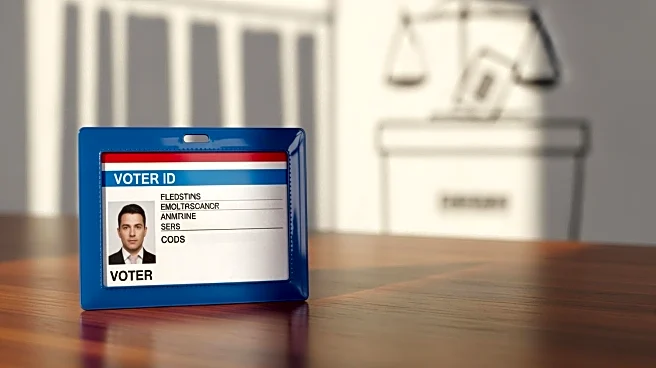
President Trump has announced plans to enforce voter ID requirements for the midterm elections through an executive order if Congress does not pass the necessary legislation. The House has passed the SAVE America Act, which mandates proof of citizenship
and photo ID for voting, but it faces significant opposition in the Senate. Legal experts argue that the president lacks the authority to unilaterally change election laws, as the Constitution delegates this power to Congress and the states. Trump's previous attempt to alter voting laws via executive order was blocked by a federal judge.
Why It's Important?
The push for voter ID laws is a contentious issue in U.S. politics, with Republicans arguing it ensures election integrity, while Democrats claim it disenfranchises millions of voters, particularly minorities and low-income individuals. The debate over voter ID laws reflects broader partisan divides on voting rights and election security. Trump's efforts to bypass Congress could lead to legal challenges and further polarization. The outcome of this initiative may influence future election laws and the balance of power between federal and state authorities in regulating elections.
What's Next?
The SAVE America Act awaits consideration in the Senate, where it faces an uphill battle due to Democratic opposition and the need for a 60-vote threshold. If Trump proceeds with an executive order, it is likely to face legal challenges, potentially reaching the courts for a decision on its constitutionality. The ongoing debate over voter ID laws will continue to be a focal point in the lead-up to the midterm elections, with potential implications for voter turnout and election outcomes.