







What's Happening?
Agricultural sustainability is emerging as a strategic priority across the Asia-Pacific (APAC) region, driven by pressing challenges such as changing rainfall patterns, extreme weather, soil degradation, and pressure on freshwater supplies. The region, facing
population growth and rising food demand, views sustainability as crucial for protecting yields, managing resource costs, and maintaining reliable food supplies. Livestock farming, a foundational element of agriculture, is particularly affected by climate change, disease, volatile commodity prices, and shifting consumer preferences, necessitating efficient methods, technological innovations, and sustainable practices. The digitization of data and reliable measurement systems are becoming increasingly important for traceability and environmental reporting. However, a significant barrier to wider adoption of sustainable practices is the financial viability for small farmers, who often lack access to credit and support systems to cover the initial investment and the lag between investment and reward.
Why It's Important?
The strategic shift towards agricultural sustainability in the APAC region holds significant implications for U.S. agriculture. As global food systems become increasingly interconnected, challenges and solutions in one region can influence others. The emphasis on resource constraints, climate change impacts, and the need for technological integration in APAC mirrors similar concerns within the U.S. agricultural sector. The difficulties faced by small farmers in APAC in adopting sustainable practices, due to financial barriers, resonate with the economic realities of many U.S. farmers. This global trend underscores the urgency for the U.S. to accelerate its own transition to sustainable agriculture to remain competitive, resilient, and environmentally responsible. Furthermore, the focus on traceability and reliable environmental reporting in APAC could set new international standards, potentially impacting U.S. agricultural exports and supply chain practices.
What's Next?
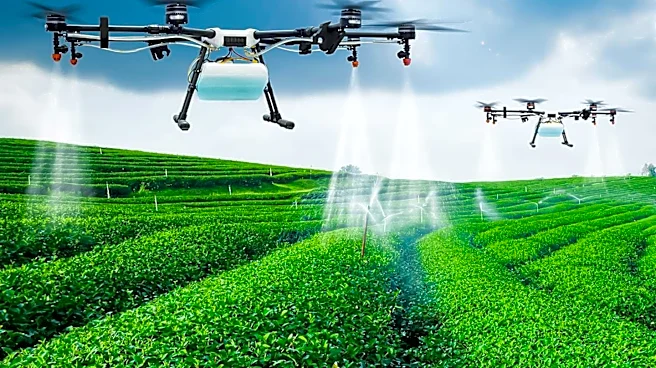
The APAC region is focusing on integrating technology, financing, and local agricultural knowledge to advance sustainability. This includes climate-smart agriculture, efficient water management, and soil conservation. Precision agriculture, remote sensing, and digital farm management systems are being deployed to improve decision-making and resource efficiency. The emphasis is on solutions that can scale without imposing excessive costs on farmers, combining locally relevant agronomic knowledge with practical implementation support. For the U.S., this suggests a need to continue investing in agricultural research and development, particularly in areas like climate-resilient crops, water-saving technologies, and soil health initiatives. Policy frameworks that support financial incentives and technical assistance for U.S. farmers to adopt sustainable practices will be crucial. Additionally, developing robust traceability and environmental reporting systems will be essential for meeting evolving global market demands and regulatory expectations.
Beyond the Headlines
The APAC region's strategic focus on agricultural sustainability highlights a broader global recognition of the intrinsic link between environmental health, economic stability, and food security. The challenges faced by livestock farming, in particular, underscore the complex interplay of climate, disease, and consumer preferences, pushing for a re-evaluation of traditional farming models. The call for reliable measurement and traceability in environmental reporting points to a future where agricultural practices are increasingly transparent and accountable. This could lead to a fundamental shift in how agricultural products are valued, with sustainability metrics becoming as important as yield and cost. The struggle of small farmers to finance sustainable transitions also brings to light the ethical dimension of equitable access to resources and support, suggesting that sustainability cannot be achieved without addressing socio-economic disparities within the agricultural community. This global movement could inspire U.S. policymakers and industry leaders to foster more inclusive and resilient agricultural systems.