




What's Happening?
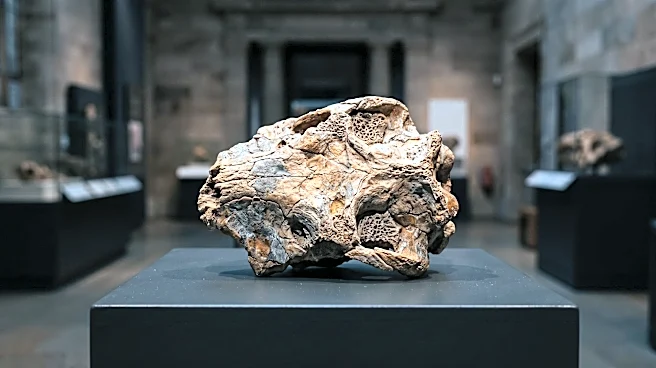
Fossils excavated in northern China between 1976 and 1979, specifically a skull fragment and a jaw fragment from the Xujiayao archaeological site, have now been identified as Denisovan. Researchers led by Qiaomei Fu at the Chinese Academy of Sciences
extracted and analyzed ancient proteins from these fragments. The identification was confirmed by the presence of a specific collagen variant, COL1A2-996K, which is unique to Denisovans. This finding, published in Nature, provides the first detailed look at the physical characteristics of Denisovans and suggests a wider geographical distribution for this extinct human group than previously understood. The study involved creating 3D computer models of the reconstructed skull and jaw bones, comparing them to Neanderthals, modern humans, and other ancient hominins. The analysis revealed that Denisovans had low, relatively flat skulls with thick bones, prominent brow ridges, and flattened facial features, blending ancestral hominin traits with characteristics shared by Neanderthals and later human species.
Why It's Important?
This discovery significantly expands the understanding of Denisovan morphology and geographical range. Previously, the Denisovan fossil record was sparse, primarily limited to cold Siberian caves and Tibetan mountains. The identification of these Chinese fossils confirms that Denisovans were widespread across East Asia, suggesting that many other unclassified fossils from the region might also belong to this lineage. This broader understanding of their distribution challenges previous assumptions about ancient human migration patterns and interactions. The detailed physical description derived from the Xujiayao fossils provides crucial data for paleoanthropologists, allowing for more accurate reconstructions and comparative studies with other hominin species. This research helps to fill critical gaps in the human family tree, offering new insights into the diversity and evolution of archaic humans in Asia.
What's Next?
The identification of the Xujiayao fossils as Denisovan opens new avenues for research into East Asian archaic Homo populations. Researchers will likely re-examine other unclassified fossil remains from the region, applying similar protein analysis techniques to determine if they also belong to the Denisovan lineage. This could lead to a more comprehensive map of Denisovan presence and interactions across Asia. Further studies will also focus on integrating these new morphological data with genetic evidence to refine our understanding of Denisovan evolutionary relationships and their contributions to modern human populations. The expanded geographical context will also prompt investigations into the environmental adaptations and cultural practices of Denisovans in diverse East Asian landscapes.
Beyond the Headlines
The ability to identify ancient human species through protein analysis, even from fossils that have been stored for decades, highlights the power of advanced scientific techniques in paleoanthropology. This method offers a way to revisit and re-evaluate existing fossil collections, potentially unlocking new information from specimens previously deemed unidentifiable. The finding also underscores the complex and interconnected nature of ancient human populations, suggesting that interbreeding and migration were more extensive than once thought. The blend of ancestral and Neanderthal-like features in Denisovan morphology further complicates the linear view of human evolution, emphasizing a more mosaic and diverse evolutionary past. This ongoing unraveling of ancient human history has profound implications for understanding the origins and development of modern human diversity.