



What's Happening?
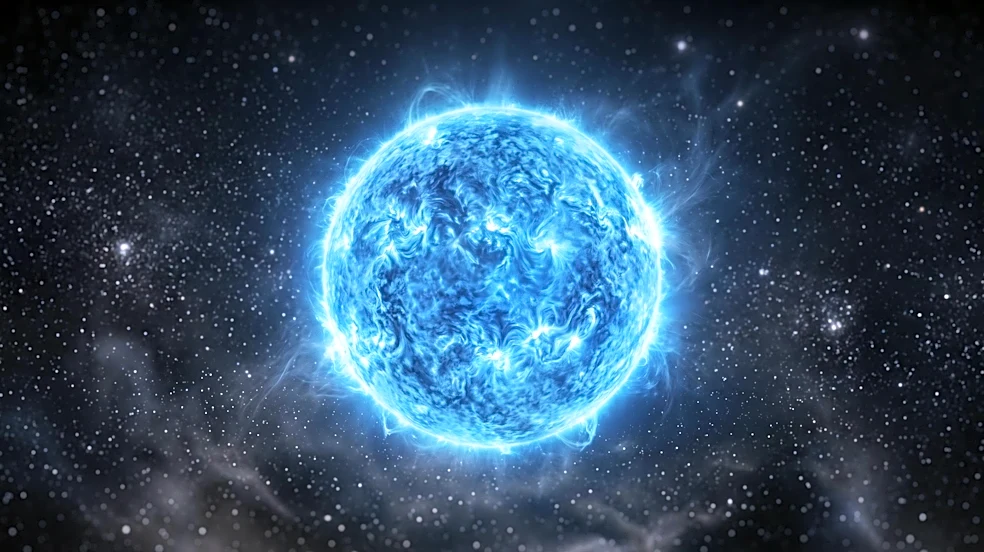
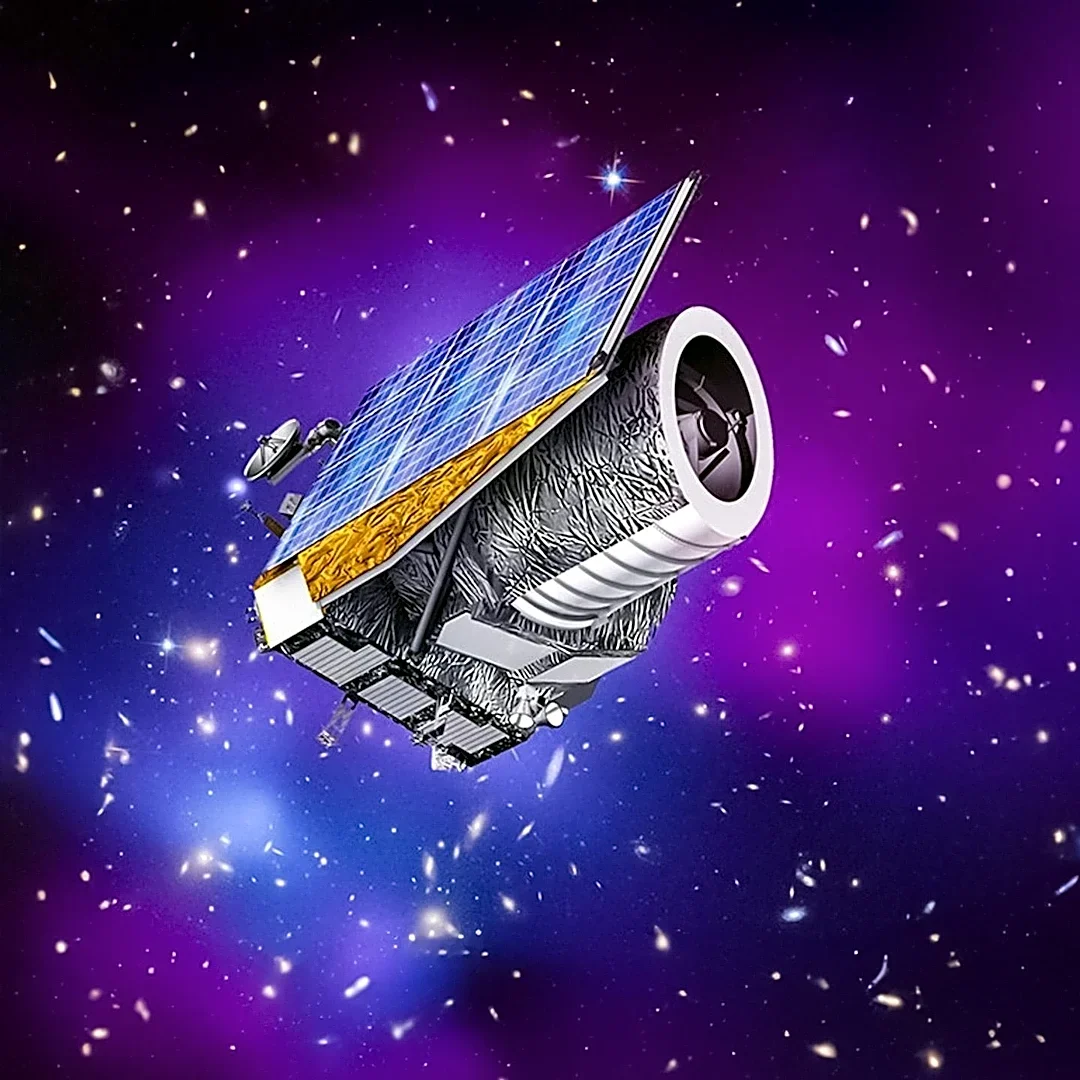
Astronomers have conducted a detailed analysis of the photometric variability of six blue supergiant (BSG) stars using data from the Transiting Exoplanet Survey Satellite (TESS). The study focused on identifying oscillation modes and analyzing frequencies
to constrain stellar masses and evolutionary stages. The selected BSGs (HD 52382, HD 74371, HD 79186, HD 80077, HD 99953, and HD 115842) all exhibit high luminosity-to-mass ratios, making them prime candidates for 'strange-mode pulsations.' The analysis involved iterative pre-whitening and the Wavelet Weighted Z-transform (WWZ) method to extract independent frequencies and assess their temporal stability. The results revealed complex low-frequency variability patterns, with several independent frequencies, transient peaks, beating frequencies, and sector-dependent signals, indicating dynamic and evolving stellar atmospheres.
Why It's Important?
Understanding the photometric variability of blue supergiants is crucial for unraveling the evolution of massive stars, which play a significant role in galactic chemical enrichment and the formation of black holes and neutron stars. Distinguishing between pre- and post-red supergiant phases is challenging, but stellar pulsations provide valuable constraints on their masses and evolutionary status. The detection and characterization of these pulsations, especially strange modes, offer a unique asteroseismic tool to probe the internal structure and dynamics of these luminous stars. The TESS data, with its high precision and long observation intervals, allows for the detection of subtle 'micro' oscillations, providing unprecedented detail. This research helps refine theoretical models of stellar interiors, mass loss mechanisms, and the stability limits of the most massive stars, ultimately improving our understanding of stellar life cycles and their impact on the cosmos.
What's Next?
Future work will involve more sophisticated theoretical modeling of the identified pulsation modes to precisely match observed frequencies with stellar parameters like mass, radius, and evolutionary stage. This will require detailed non-adiabatic pulsation models to interpret the complex variability patterns. Further observations, potentially with other space-based telescopes or ground-based interferometers, could provide complementary data, such as radial velocity measurements, to confirm the nature of the detected oscillations. Comparative studies with larger samples of blue supergiants will help establish common variability characteristics and identify unique behaviors. The insights gained will contribute to a more robust framework for asteroseismology of massive stars, enabling more accurate age and mass determinations for these crucial stellar objects and refining our understanding of their role in the universe.
Beyond the Headlines
The study of blue supergiants' pulsations delves into the fundamental physics governing the most massive and luminous stars in the universe. These stars live fast and die young, often ending their lives in spectacular supernova explosions. Their internal dynamics, revealed through subtle light variations, are a window into extreme physical conditions—high temperatures, pressures, and rapid energy transport. The 'strange modes' of pulsation, driven by complex interactions between radiation and matter, represent a frontier in stellar astrophysics. This research not only refines our understanding of individual stars but also contributes to the broader narrative of cosmic evolution, from the birth of stars to the creation of heavy elements and the formation of compact remnants. It highlights the power of asteroseismology as a tool to 'see' inside stars, much like seismology reveals Earth's interior, pushing the boundaries of our knowledge about the universe's most energetic inhabitants.