





What's Happening?
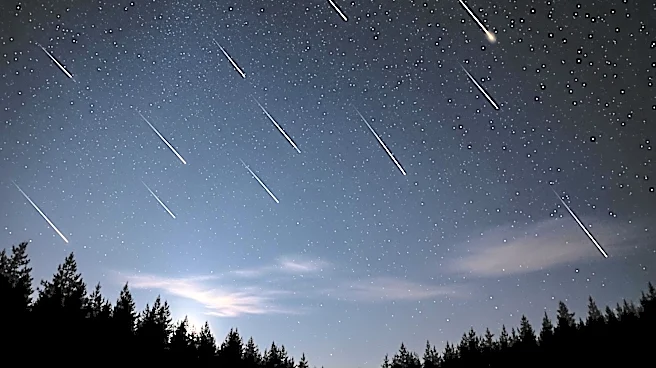
The June Bootids meteor shower, known for its unpredictability, is expected to peak this week. According to the Society for Popular Astronomy, this meteor shower typically produces only a few meteors but has a history of surprise outbursts. Notable past
events include an unexpected outburst in 1998 with a Zenithal Hourly Rate (ZHR) between 50 and 100, and another in 2004 with ZHRs of about 50. The June Bootids are associated with Comet 7P/Pons-Winnecke and are best viewed from the Northern Hemisphere, where the radiant is higher in the sky. The American Meteor Society advises that the best viewing conditions are in areas away from light pollution, where meteors should become visible after about 30 minutes of darkness.
Why It's Important?
Meteor showers like the June Bootids offer a unique opportunity for both amateur and professional astronomers to observe celestial phenomena. The unpredictability of the June Bootids adds an element of excitement and challenge, as skywatchers may witness unexpected bursts of activity. This event also serves as a reminder of the dynamic nature of our solar system and the ongoing interactions between Earth and cosmic debris. For the general public, meteor showers are accessible astronomical events that can inspire interest in science and the universe.
What's Next?
Following the June Bootids, other meteor showers such as the Southern Delta Aquariids and the Alpha Capricornids are expected to peak later this summer. Additionally, a partial solar eclipse will be visible from parts of the U.S. on August 12, providing another opportunity for skywatchers to engage with astronomical events. These upcoming events continue to offer opportunities for public engagement and education in astronomy.