



What's Happening?
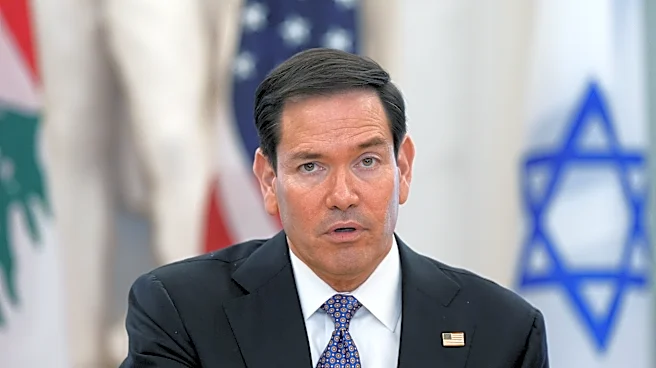
President Trump announced that Israel and Lebanon have agreed to extend a ceasefire between Israel and Hezbollah by three weeks. This decision followed a meeting at the White House involving the Israeli and Lebanese ambassadors to the United States. The
initial 10-day ceasefire, which began last Friday, was set to expire on Monday. The U.S. aims to assist Lebanon in protecting itself from Hezbollah, with Trump expressing a desire to meet Israeli Prime Minister Benjamin Netanyahu and Lebanese President Joseph Aoun soon. The talks are part of ongoing efforts to formalize peace between the two nations, which have been at war since 1948.
Why It's Important?
The extension of the ceasefire is significant as it represents a rare moment of direct negotiation between Israel and Lebanon, two countries with no formal diplomatic relations. The U.S. involvement underscores its role as a mediator in Middle Eastern conflicts. The ceasefire aims to halt hostilities that have resulted in significant casualties and displacement in Lebanon. The talks also highlight the broader geopolitical dynamics involving Iran, as Hezbollah is an Iran-backed group. Successful negotiations could lead to a more stable region and potentially pave the way for a formal peace agreement.
What's Next?
Future negotiations are expected to address broader issues such as the withdrawal of Israeli troops from Lebanon and the disarmament of Hezbollah. The U.S. plans to continue its diplomatic efforts, with potential high-level meetings involving leaders from Israel and Lebanon. The outcome of these talks could influence regional stability and the balance of power in the Middle East. Additionally, the Lebanese government is considering joining the International Criminal Court to address alleged war crimes, which could further complicate or aid in the peace process.