



What's Happening?
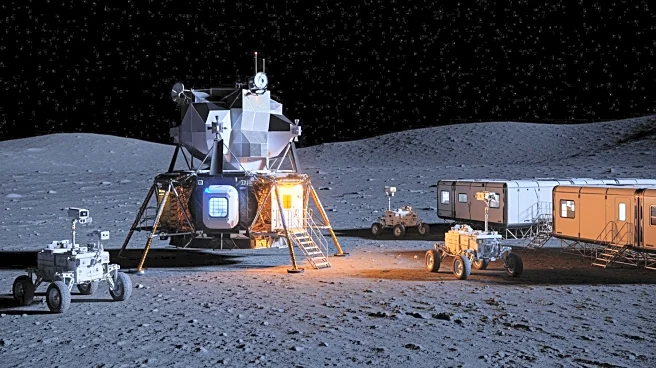
SpaceX, led by Elon Musk, has announced a strategic shift in its space exploration focus from Mars colonization to establishing a self-sustaining city on the Moon. This decision is driven by the logistical advantages of shorter travel times and more frequent
launch opportunities to the Moon compared to Mars. The move aligns with NASA's Artemis program, with which SpaceX has a multi-billion dollar contract. This pivot is seen as a pragmatic approach to space exploration, leveraging existing collaborative frameworks and financial support structures. The decision comes amidst growing competition with China, which is also pursuing lunar ambitions.
Why It's Important?
The shift in focus from Mars to the Moon by SpaceX has significant implications for the future of space exploration. It highlights a strategic realignment that could accelerate the establishment of a permanent human presence on the Moon. This move not only intensifies the competition between the United States and China in space exploration but also has the potential to redefine international alliances and resource claims, particularly concerning lunar water ice. The collaboration between SpaceX and NASA exemplifies the synergy between private sector innovation and governmental efforts, potentially setting a precedent for future space endeavors.
What's Next?
SpaceX's focus on lunar development is expected to expedite the process of building a self-sustaining city on the Moon. The company plans to leverage its contract with NASA for the Artemis III mission to enhance the feasibility of these ambitions. As the competition with China intensifies, the geopolitical stakes in space exploration are likely to increase. The success of SpaceX's lunar ambitions could influence future space policies and international collaborations, potentially leading to new agreements on resource sharing and exploration rights.