








What's Happening?
Jonathan, an Aldabra giant tortoise estimated to be 194 years old and the oldest known living land animal, has become a subject of scientific research into longevity. Scientists have sequenced his genome and examined his epigenome, which consists of chemical
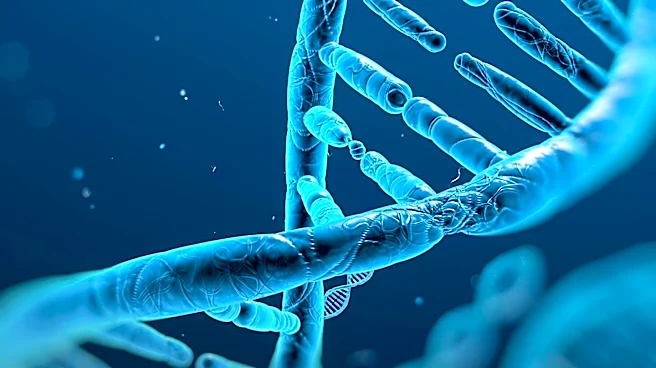
markers that regulate gene activity. By comparing Jonathan's epigenome with those of four other Aldabra tortoises of varying ages, researchers discovered that some of his gene-control regions, particularly those associated with DNA repair and energy management, appear significantly more orderly than expected for his age. In fact, on one measure of epigenetic disorder, only a five-year-old tortoise in the comparison group scored lower. Additionally, Jonathan's DNA contains 287 unique gene variants not found in the other tortoises, some of which are linked to DNA repair and tumor suppression. While researchers, including co-lead author Benjamin Vaisvil, caution against definitively attributing his longevity solely to these findings, acknowledging factors like his diet and island environment, the study suggests that nature has already conducted 'long-life experiments' that can offer valuable insights into healthy aging.
Why It's Important?
This research on Jonathan the tortoise holds significant implications for understanding the mechanisms of healthy aging, potentially influencing future studies in human longevity. The discovery that an exceptionally long-lived animal exhibits surprisingly youthful gene controls, particularly in areas critical for DNA repair and energy management, suggests that these biological pathways are key to extended lifespans. If similar epigenetic patterns or gene variants can be identified and understood in other species, including humans, it could pave the way for novel therapeutic interventions or lifestyle recommendations aimed at promoting healthier and longer lives. The study underscores the idea that biological age, as indicated by epigenetic markers, can diverge significantly from chronological age, offering a new perspective on how aging processes can be modulated. For the scientific community, Jonathan serves as a unique natural model, providing a rare opportunity to study extreme longevity and the underlying genetic and epigenetic factors that contribute to it.
What's Next?
The findings from Jonathan's epigenome are expected to prompt further research into the specific gene-control regions and variants identified. Scientists will likely investigate how these particular epigenetic patterns contribute to enhanced DNA repair and energy management, and whether these mechanisms can be replicated or stimulated in other organisms. Future studies might focus on understanding the interplay between genetic predispositions, environmental factors, and epigenetic modifications in promoting longevity. This could involve broader comparative genomic and epigenomic studies across various long-lived species. The insights gained could also inform the development of new biomarkers for biological aging, allowing for more precise assessments of an individual's health and potential lifespan. Ultimately, the goal is to translate these fundamental discoveries into practical applications that could benefit human health and extend healthy lifespans.
Beyond the Headlines
Beyond the immediate scientific implications, Jonathan's case highlights a broader shift in longevity research, moving beyond simply extending life to understanding 'healthy aging.' The focus on epigenetic markers and gene regulation suggests that the quality of life in advanced age is deeply intertwined with how our genes are expressed and maintained. This research could inspire a re-evaluation of environmental and lifestyle factors that influence epigenetic health, emphasizing the importance of diet, stress management, and exposure to certain elements in promoting cellular resilience. Ethically, as our understanding of longevity grows, it raises questions about the societal implications of significantly extended human lifespans, including resource allocation, healthcare systems, and social structures. Culturally, the story of Jonathan, a creature defying typical aging patterns, serves as a powerful symbol of nature's potential and continues to fuel humanity's ancient quest for the secrets to a longer, healthier existence.