



What's Happening?
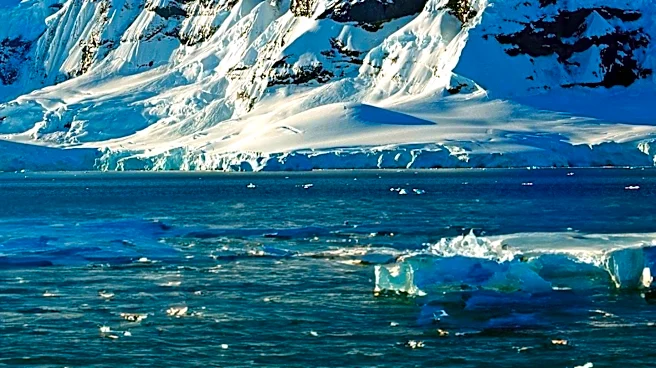
A geoengineering experiment in Ikaluktutiak, Nunavut, Canada, is demonstrating promising results in preserving sea ice. Conducted by the UK startup Real Ice, the project involves drilling holes in sea ice and pumping seawater to the surface during winter,
where it freezes and thickens the ice layer. This process also increases the ice's reflectivity, enhancing its albedo and slowing melting. By May 2026, the treated sea ice was 50 centimeters thicker than untreated ice. The experiment, which began in 2023, uses small pumps with minimal energy consumption, suggesting potential for scalable ecosystem conservation efforts.
Why It's Important?
This experiment represents a significant step in exploring practical geoengineering solutions to combat climate change. By thickening and preserving sea ice, the project could help mitigate the effects of global warming in Arctic regions, which are experiencing rapid ice loss. The success of such localized interventions could inform broader strategies for climate adaptation and resilience, offering a model for other vulnerable regions. The project's low energy requirements and community involvement highlight the potential for sustainable and inclusive climate solutions.
What's Next?
The promising results from Ikaluktutiak may encourage further research and investment in similar geoengineering projects. As the experiment continues, scientists will monitor its long-term impacts on local ecosystems and climate patterns. The scalability of this approach could lead to broader applications in other Arctic regions, potentially influencing global climate policy and adaptation strategies.