




What's Happening?
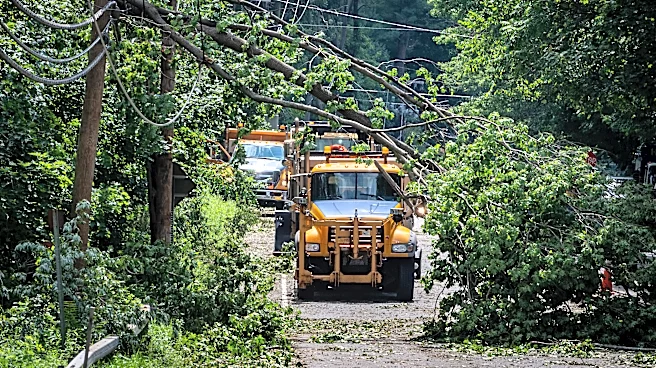
Fort George G. Meade has completed the removal of 51 high-priority hazardous trees across its installation. This initiative aims to reduce risks to personnel and property, while also protecting critical infrastructure from severe weather events. According
to Julie Adkins, Fort Meade's natural resources program manager, these trees posed the greatest potential threat to life and property due to their risk of uncontrolled falls. The effort is part of a broader strategy to support installation resilience and mission readiness by mitigating hazards to roads, facilities, and essential infrastructure. An extensive tree survey conducted in 2024 identified approximately 200 trees as dead, hazardous, or potentially hazardous, with the current removal focusing on the most critical cases. The work was carried out by Melwood, the installation's internal grounds crew, with arborists assessing the survey list and selecting trees based on risk.
Why It's Important?
The removal of hazardous trees at Fort Meade is crucial for maintaining the operational integrity and safety of a key U.S. military installation. As the nation's platform for intelligence, information, and cyber operations, Fort Meade relies on dependable utilities, communications, and transportation access to support its tenant organizations and workforce. Uncontrolled tree falls could disrupt these critical services, impacting national security operations. This proactive measure safeguards personnel, including service members, their families, visitors, and employees, from potential injury. Furthermore, protecting infrastructure from storm damage ensures continuous mission readiness, preventing costly repairs and operational downtime. The initiative also highlights the importance of environmental management within military bases, balancing natural resource preservation with safety and operational requirements. This effort demonstrates a commitment to resilience against environmental stresses, which is increasingly vital given changing weather patterns.
What's Next?
Fort Meade plans to continue its hazardous tree removal program, with the remaining identified trees scheduled for removal during fiscal year 2027. However, this timeline may be subject to deferral based on other high-priority mission requirements. Concurrently, the installation is working on restoring its tree canopy where practical, with utility projects often requiring replacement plantings. A comprehensive installation canopy survey is planned for fiscal year 2027 to identify areas most in need of new trees, including locations for shade in recreation areas and heat mitigation. This survey will also provide updated information on canopy coverage across the installation, guiding future planting efforts. The wood from removed trees is being repurposed, either chipped for on-site use or taken to disposal facilities for mulch or compost.
Beyond the Headlines
The tree removal project at Fort Meade subtly underscores the broader challenges faced by large, established military installations in adapting to environmental changes and maintaining infrastructure. The need to remove hazardous trees reflects the aging of natural landscapes within these bases and the increasing frequency or intensity of severe weather events. This initiative is not merely about safety but also about long-term sustainability and resilience in the face of climate impacts. The repurposing of cleared wood demonstrates a commitment to environmental stewardship and resource efficiency, aligning with broader federal sustainability goals. Furthermore, the detailed planning and execution, involving surveys and certified arborists, highlight the complex interplay between environmental science, facility management, and national security imperatives. This proactive approach to natural resource management is a critical, though often overlooked, component of maintaining operational readiness and protecting valuable government assets.