


What's Happening?
A joint report by the U.N. Office for Disaster Risk Reduction (UNDRR) and the World Meteorological Organization (WMO) indicates that 70% of countries worldwide now possess multi-hazard early warning systems. This marks a significant increase, with 136
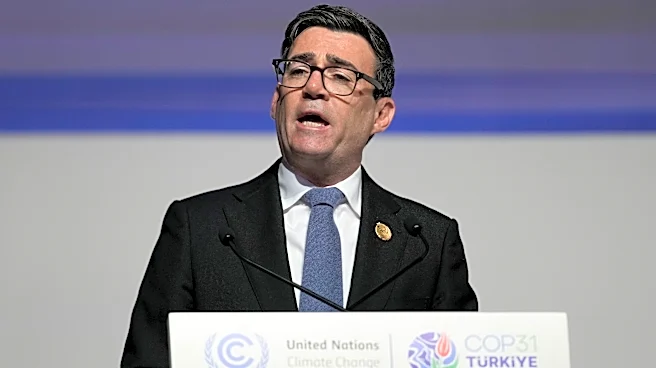
countries reporting such capabilities, up by 17 since March 2025 and a 143% rise since tracking began in 2015. The report, released during a high-level U.N. summit in Antalya, Turkey, highlights that countries with comprehensive warning systems experienced disaster-related mortality rates 6.1 times lower and 3.2 times fewer people affected compared to those with limited systems. WMO Secretary-General Celeste Saulo noted that the current El Niño event could be unprecedented in strength, emphasizing the role of early warning systems in mitigating its human consequences. Despite global progress, small island developing states (SIDS) and least developed countries (LDCs) still show the lowest coverage and comprehensiveness scores, although LDCs have shown the fastest improvement rates. Regionally, Africa saw the largest jump in coverage, reaching 77%, while Europe and Central Asia maintained the most comprehensive systems.
Why It's Important?
The expansion of multi-hazard early warning systems is crucial for global disaster risk reduction, particularly as climate change intensifies extreme weather events. The data clearly demonstrates a direct correlation between robust warning systems and reduced mortality and impact from disasters. For the U.S., this global trend is important as it contributes to overall international stability and humanitarian efforts, which can indirectly affect U.S. foreign policy and aid commitments. Furthermore, advancements in meteorological science and early warning technologies developed internationally can inform and enhance domestic disaster preparedness strategies. The persistent gaps in vulnerable nations, such as SIDS and LDCs, highlight areas where international cooperation and investment, potentially involving U.S. expertise and resources, are still critically needed to build resilience and prevent humanitarian crises that could require international intervention. The ongoing El Niño event, described as potentially unprecedented, underscores the urgency of these systems in protecting populations and economies worldwide.
What's Next?
The U.N. agencies emphasize that strengthening early warning and early action in the most vulnerable countries must be a top global priority. This suggests continued international efforts and funding will be directed towards improving and expanding these systems, particularly in SIDS and LDCs. Future initiatives will likely focus on enhancing underlying infrastructure and securing pre-arranged financing to support these systems. The ongoing El Niño event will serve as a critical test for existing early warning capabilities and will likely inform future strategies and investments. International forums like the U.N. summit in Antalya will continue to be platforms for discussing progress, identifying challenges, and coordinating global responses to climate-driven disasters. The WMO will likely continue to monitor and report on the effectiveness and reach of these systems, guiding policy and resource allocation in the coming years.
Beyond the Headlines
The increasing adoption of multi-hazard early warning systems reflects a broader global shift towards anticipatory action in disaster management, moving from reactive responses to proactive preparedness. This paradigm shift has profound ethical implications, as it prioritizes the protection of human life and livelihoods by leveraging scientific advancements and international cooperation. The disparities in coverage and comprehensiveness, particularly in the most vulnerable nations, underscore issues of climate justice and equity, highlighting that those least responsible for climate change often bear its heaviest burdens. Long-term, the success of these systems depends not only on technological deployment but also on effective communication, community engagement, and sustained political will. This development could also foster greater data sharing and scientific collaboration among nations, leading to a more integrated global approach to climate resilience and disaster prevention.