

What's Happening?
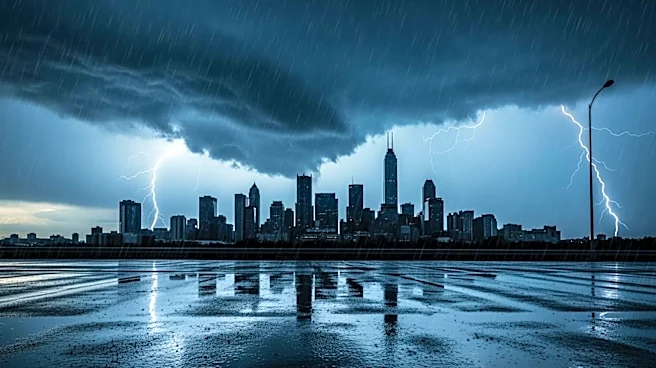
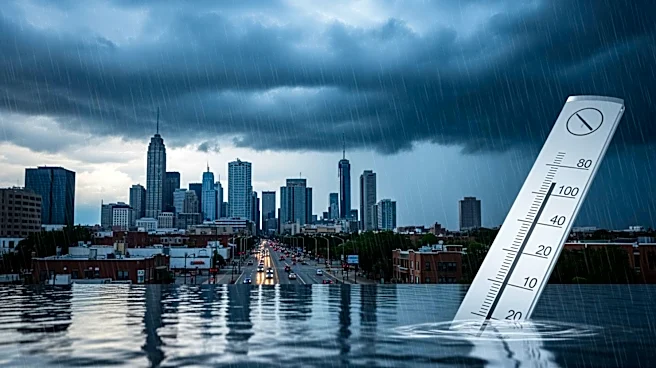
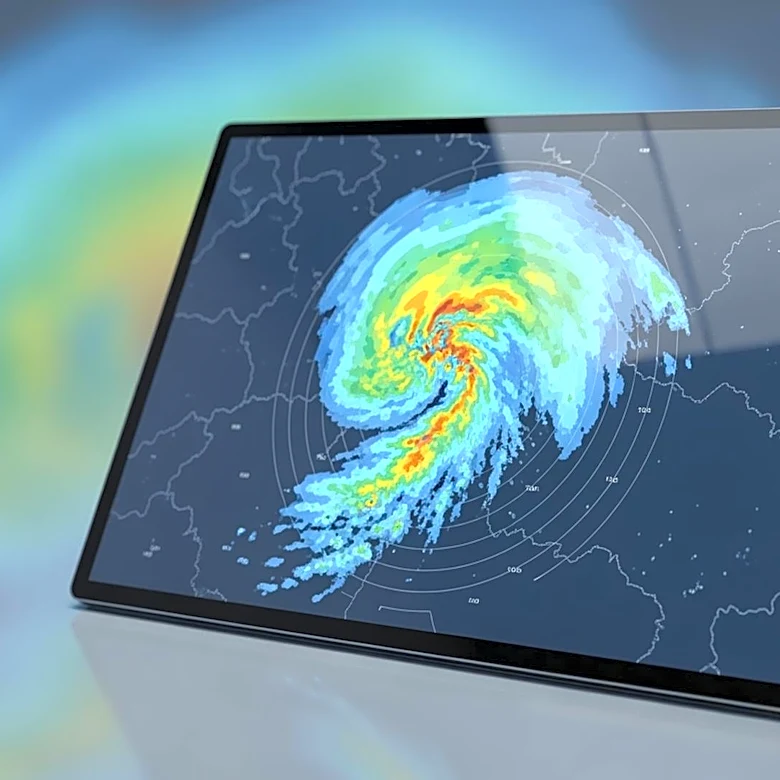
Chicago has broken a 77-year-old daily rainfall record as severe storms continue to impact the Great Lakes region. The National Weather Service reported that Chicago O'Hare International Airport recorded 2.43 inches of rain, surpassing the previous record set
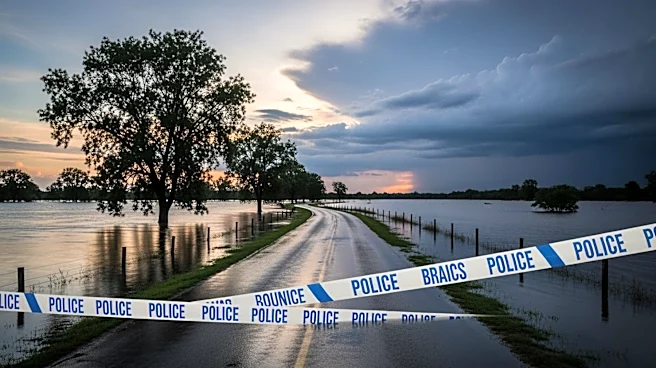
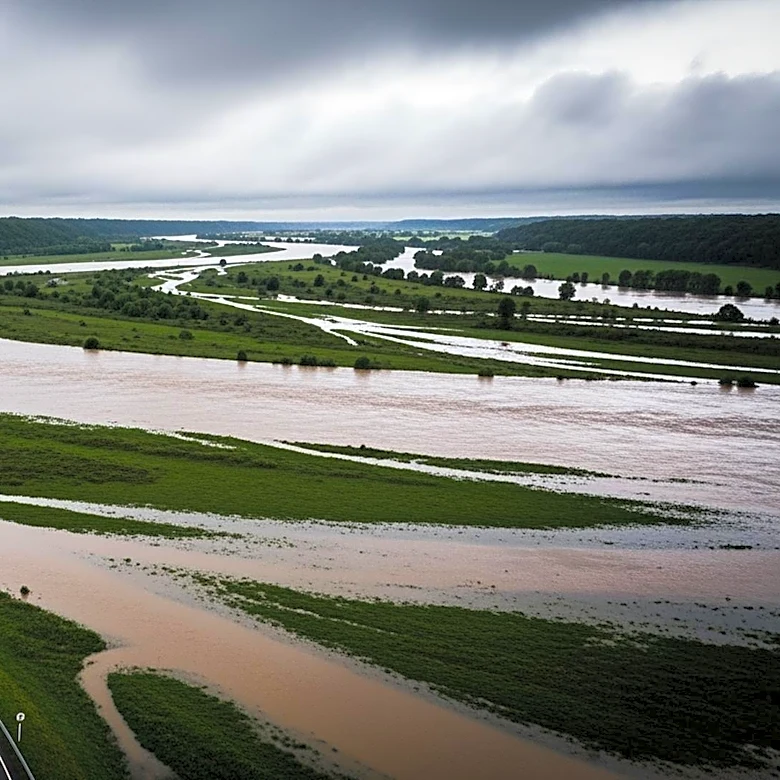
in 1949. The heavy rainfall has led to widespread flooding concerns, with drainage systems overwhelmed and roads ponding. Flood-related advisories and warnings are in place across Illinois, Wisconsin, and Michigan, with some expected to persist for days. The saturated ground increases the risk of additional flooding, and the region remains under threat of thunderstorms.
Why It's Important?
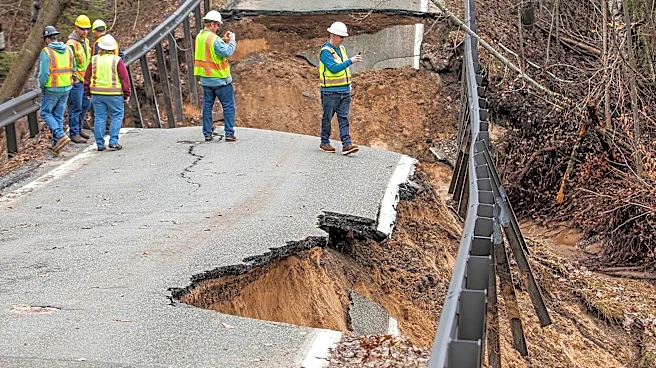
The record-breaking rainfall in Chicago underscores the increasing frequency and intensity of extreme weather events, which can strain urban infrastructure and emergency services. The flooding poses significant risks to public safety, property, and transportation systems. The situation highlights the need for cities to enhance their drainage and flood management systems to cope with such events. The ongoing severe weather also affects economic activities, as businesses and transportation networks face disruptions. The persistent threat of thunderstorms and additional rainfall could exacerbate the situation, leading to further challenges for residents and emergency responders.
What's Next?
Authorities in Chicago and the surrounding areas will continue to monitor weather conditions and issue advisories as necessary. Efforts to manage floodwaters and repair any damage will be ongoing. Residents are advised to stay informed about weather updates and take precautions to protect themselves and their property. The situation may prompt discussions on improving urban infrastructure to better handle extreme weather events and mitigate future risks. Emergency services will remain on high alert to respond to any developments.