






What's Happening?
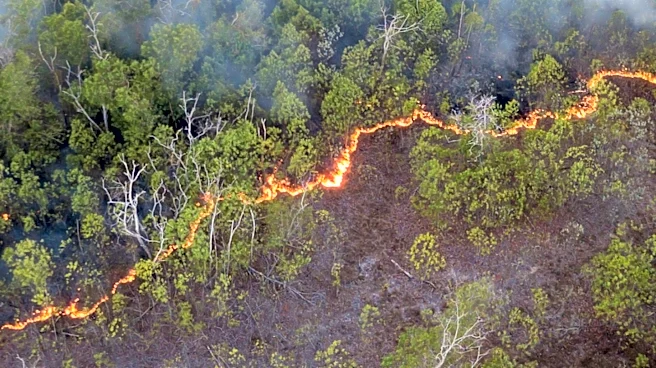
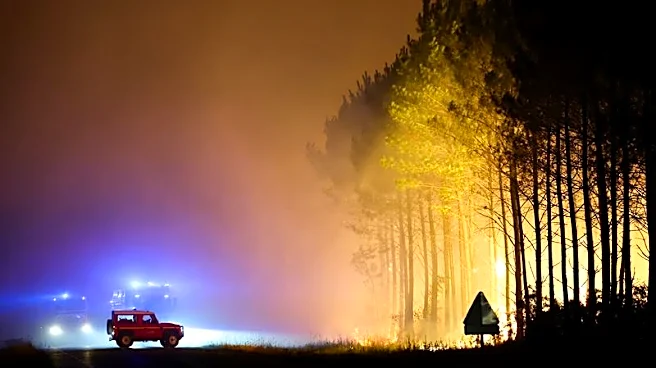
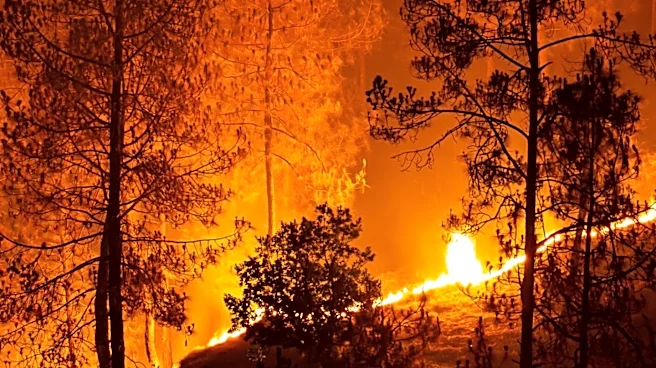
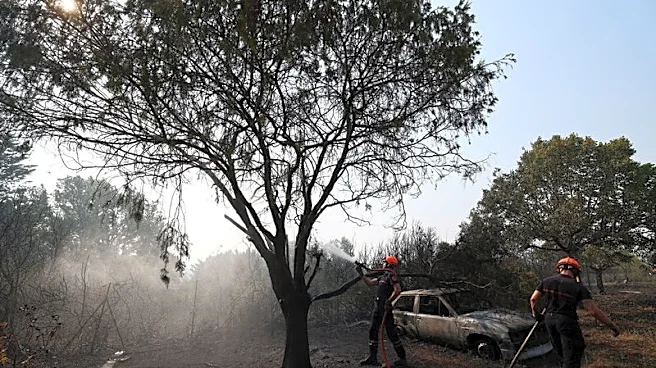
French authorities have mandated a complete evacuation of the Cap Ferret peninsula, a popular tourist destination on the Atlantic Coast, due to a severe wildfire threat. The evacuation involves transporting people by boat from the area, which is currently
filled with tourists staying in campsites and rental homes. The fire has already devastated 8,700 hectares and continues to spread. French President Emmanuel Macron has sought assistance from the European Union, requesting the activation of the EU's civil protection mechanism. This will bring reinforcements, including aircraft and helicopters from Croatia, Portugal, the Czech Republic, and Slovakia. The region has been severely affected by successive heatwaves, which have intensified drought conditions and left vegetation extremely dry, contributing to the wildfire's rapid spread.
Why It's Important?
The evacuation underscores the severity of the wildfire crisis in France, exacerbated by extreme weather conditions. The situation highlights the broader challenges posed by climate change, as increased temperatures and prolonged droughts create conditions conducive to wildfires. The impact on tourism, a significant economic sector for the region, is immediate, with thousands of tourists displaced. The reliance on EU assistance also emphasizes the need for international cooperation in addressing natural disasters. The ongoing wildfires pose a threat to property, wildlife, and human life, necessitating urgent action and long-term strategies to mitigate such risks in the future.
What's Next?
The immediate focus is on controlling the wildfires and ensuring the safety of evacuees. Authorities will continue to monitor weather conditions and adjust their response strategies accordingly. The involvement of EU resources will be crucial in managing the crisis. In the longer term, France may need to reassess its disaster preparedness and response strategies, particularly in light of climate change. This could involve investing in more robust firefighting resources and infrastructure, as well as implementing policies to reduce the risk of future wildfires.