






What's Happening?
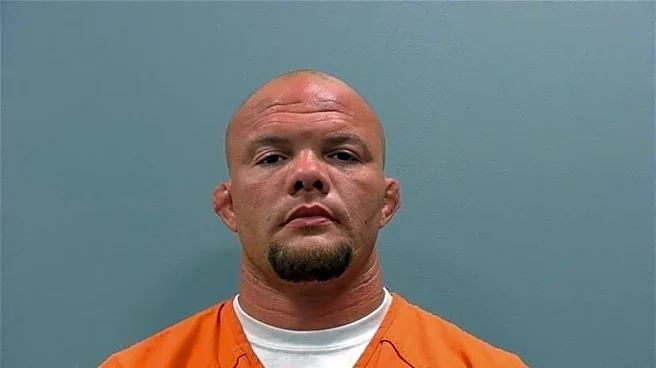
Charles Yingst, a 44-year-old Fairbanks man, has been arrested in Big Lake following an extensive surveillance operation conducted by the Alaska State Troopers (AST) Criminal Suppression Unit and the United States Marshals Service. Yingst was wanted on multiple
warrants totaling over $2 million. He had been under house arrest since February, awaiting trial on fraud and theft charges, when authorities were notified on July 21 that his ankle monitor had been cut off and he was missing. Following his apprehension last Wednesday, Yingst faces additional charges, including multiple misdemeanor counts of escaping and several felony charges for violating pre-trial release conditions. He is scheduled for arraignment at the Superior Court in Fairbanks this Wednesday.
Why It's Important?
The arrest of Charles Yingst highlights the persistent efforts of law enforcement agencies in Alaska to apprehend individuals who attempt to evade justice, particularly those with significant outstanding warrants. The involvement of both the Alaska State Troopers and the United States Marshals Service underscores the seriousness of the charges and the resources dedicated to locating fugitives. Cases like Yingst's, involving escape from house arrest and substantial financial warrants, can erode public trust in the justice system if not effectively managed. His re-apprehension reinforces the message that such evasions will be met with determined pursuit, potentially deterring others from similar actions and upholding the integrity of pre-trial release conditions. The successful operation also demonstrates inter-agency cooperation in complex fugitive investigations.
What's Next?
Charles Yingst is scheduled to appear for an arraignment at the Superior Court in Fairbanks this Wednesday. During this proceeding, he will formally be presented with the new charges related to his escape and violation of pre-trial release conditions. The court will likely address his bail status, given his previous escape, and set a schedule for future court appearances. His attorney has declined to comment at this time. The legal process will proceed with potential plea negotiations or a trial for both the original fraud and theft charges, as well as the new charges stemming from his escape and violation of release conditions. The outcome of these proceedings will determine the extent of his legal consequences.
Beyond the Headlines
The case of Charles Yingst touches upon broader issues within the criminal justice system, particularly the effectiveness and challenges of electronic monitoring and house arrest as alternatives to incarceration. While these measures aim to reduce jail populations and allow defendants to maintain some normalcy before trial, incidents like Yingst's escape expose vulnerabilities in the system. It prompts questions about the level of supervision required for individuals facing serious charges and the potential need for enhanced monitoring technologies or stricter enforcement protocols. Furthermore, the substantial amount of the warrants—over $2 million—suggests the scale of the alleged fraud and theft, which could have significant financial implications for victims and the broader community, underscoring the importance of accountability in such cases.