




What's Happening?
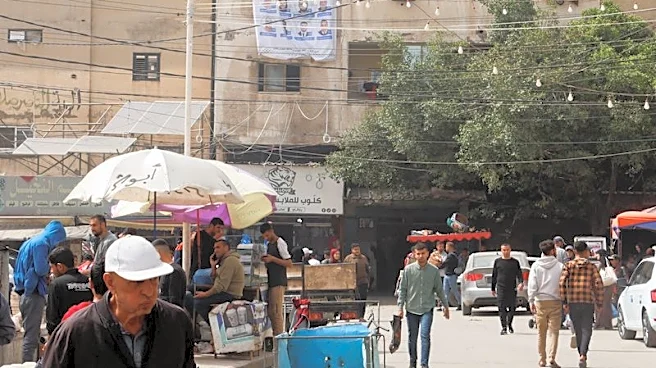
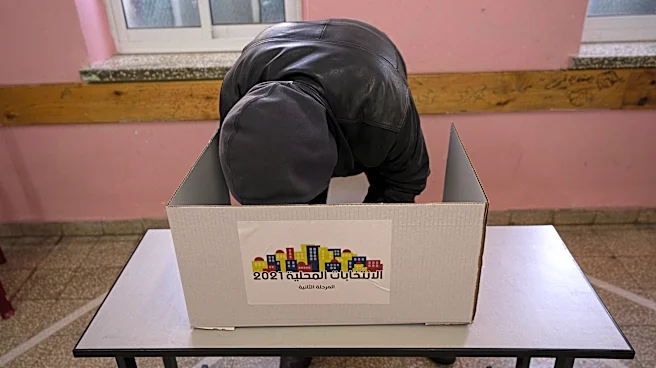
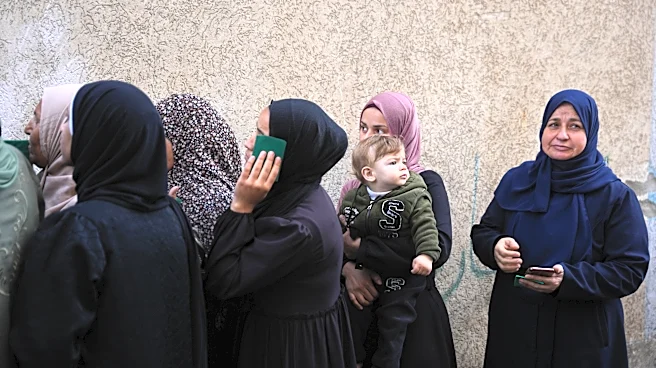
Palestinian officials have hailed the recent local elections in a Gaza community and the West Bank as a success, marking a step towards long-delayed presidential elections and eventual statehood. The elections, held in Deir al-Balah in Gaza and various
locations in the West Bank, were the first since reforms were enacted to allow voting for individuals rather than slates. Despite challenges such as large-scale displacement and outdated civil registry records, the turnout in Deir al-Balah was 23%, while the West Bank saw a turnout of 56%. The elections were dominated by independents and Fatah, the faction leading the Palestinian Authority. Hamas did not field candidates nor obstruct the vote. The elections are seen as a reflection of national unity, with hopes for future presidential and legislative elections.
Why It's Important?
These local elections are significant as they represent a move towards greater democratic processes in Palestinian territories, which have been marred by political fragmentation and conflict. The elections are a response to international pressure for reforms and are seen as a step towards broader political engagement and potential statehood. The Palestinian Authority, which has not held a presidential election in 21 years, faces waning support due to corruption and frustration over Israeli settlements. The elections could pave the way for more comprehensive political reforms and increased representation for Palestinians, potentially impacting regional stability and international relations.
What's Next?
The Palestinian Authority aims to hold elections in other parts of the Gaza Strip, with hopes for presidential and legislative elections to follow. The success of these local elections could encourage further democratic reforms and political engagement among Palestinians. However, challenges remain, including political fragmentation and opposition from Israel regarding Palestinian statehood. The international community may continue to exert pressure for democratic reforms, while Palestinian leaders and civil society groups advocate for broader electoral processes.
Beyond the Headlines
The elections highlight the complex political landscape in Palestinian territories, where local governance is intertwined with broader issues of national identity and statehood. The focus on individual voting rather than party slates reflects a shift towards more personalized political engagement, potentially reducing the influence of traditional political factions. This development could lead to a more diverse political representation and empower local leaders to address community-specific issues. The elections also underscore the ongoing struggle for Palestinian self-determination and the challenges of achieving political unity amid regional conflicts.