


What's Happening?
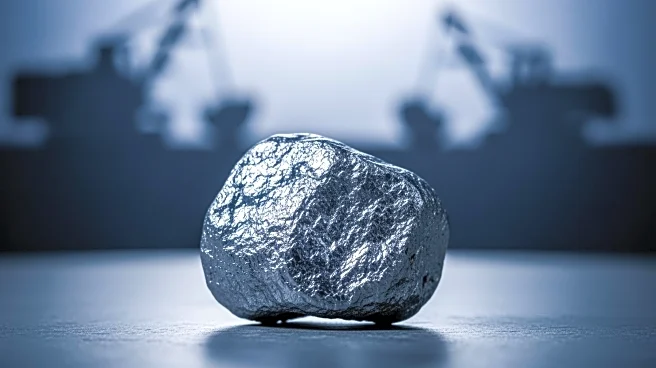
The United States is set to secure a critical supply of tungsten from the Sangdong mine in South Korea, operated by Almonty Industries. This development comes as the U.S. seeks to reduce its reliance on China, which currently dominates the global market
for rare earths and critical minerals. The Sangdong mine, which was closed for over 30 years due to China's pricing strategies, has been reopened by Almonty Industries. The company has signed an agreement to supply tungsten to meet U.S. defense needs, although specific details of the deal remain undisclosed. Tungsten is essential for various applications, including defense, due to its high melting point and use in munitions, armor, and AI chips.
Why It's Important?
This move is significant as it represents a strategic effort by the U.S. to diversify its supply chains and reduce dependency on China for critical minerals. Tungsten is vital for national security, particularly in defense applications. The reopening of the Sangdong mine is part of a broader initiative to establish alternative supply chains amid ongoing trade tensions with China. The U.S. government's involvement underscores the importance of securing a stable supply of tungsten to support defense and other industries. This shift could impact various sectors, including automotive and technology, as they adapt to new supply sources.
What's Next?
Almonty Industries plans to have the Sangdong mine fully operational by the first quarter of 2026, with production expected to run 16 hours a day. The associated processing plant will operate 24 hours a day, aiming to produce 1.2 million tons of tungsten ore annually. The U.S. is also exploring other sources of critical minerals, including potential sites in Africa, to further diversify its supply chains. However, the transition away from Chinese materials is expected to be challenging and may lead to temporary disruptions in some industries as they adjust to new supply dynamics.
Beyond the Headlines
The reopening of the Sangdong mine highlights the geopolitical implications of mineral supply chains. As the U.S. seeks to reduce its reliance on China, it faces the challenge of rebuilding domestic capabilities and training a workforce to manage these operations. The shift also reflects broader efforts to secure critical resources amid global competition and trade tensions. The U.S. government's proactive approach in securing tungsten supplies indicates a strategic prioritization of national security interests over short-term economic considerations.