




What's Happening?
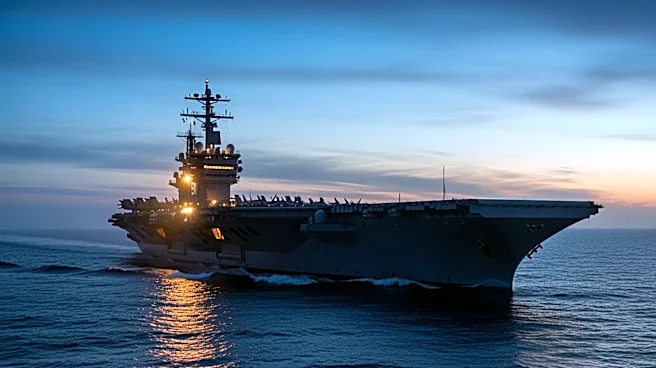
The USS Gerald R. Ford, the largest and most powerful aircraft carrier in the United States, recently experienced a significant setback due to a fire that occurred a month ago. This incident is the latest in a series of challenges faced by the ship, which
is currently on an extended deployment. The USS Gerald R. Ford is a central element of President Trump's military strategy, highlighting its importance in U.S. defense operations. The fire has raised concerns about the ship's operational readiness and the impact on its deployment schedule. The incident underscores the ongoing challenges in maintaining and operating such a complex and advanced naval vessel.
Why It's Important?
The USS Gerald R. Ford plays a crucial role in the U.S. Navy's strategic capabilities, serving as a key asset in projecting military power globally. The recent fire incident could have significant implications for U.S. military operations, potentially affecting deployment schedules and readiness. This setback may also impact President Trump's military ambitions, as the carrier is a pivotal component of his defense strategy. The incident highlights the challenges of maintaining advanced military technology and the potential vulnerabilities that can arise. It also underscores the importance of ensuring the safety and operational efficiency of critical defense assets.
What's Next?
Following the fire incident, the U.S. Navy is likely to conduct a thorough investigation to determine the cause and assess the damage to the USS Gerald R. Ford. This process will be crucial in preventing similar incidents in the future and ensuring the ship's operational readiness. The Navy may also need to adjust deployment schedules and strategies to accommodate any delays in the carrier's availability. Additionally, there may be increased scrutiny on the maintenance and safety protocols of advanced naval vessels, potentially leading to policy changes or additional funding for upgrades and repairs.