



What's Happening?
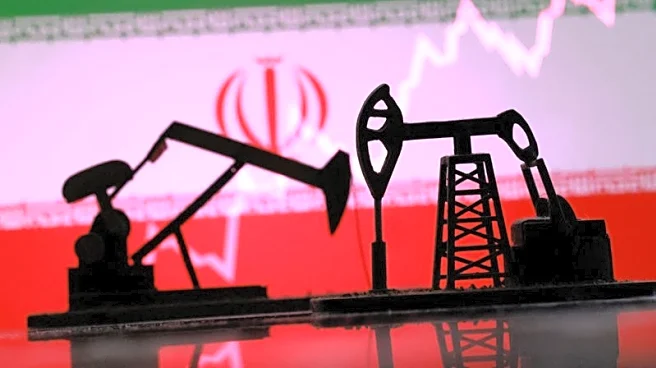
The Trump administration has granted a temporary license allowing Iran to sell approximately 140 million barrels of crude oil. This decision comes as the conflict between the U.S., Israel, and Iran enters its fourth week, with significant military actions
continuing in the region. The temporary easing of sanctions aims to stabilize global oil markets, which have been affected by the ongoing hostilities. Despite this move, U.S. officials indicate that the financial benefit to Iran will be minimal due to existing sanctions on its banking system. Meanwhile, military tensions remain high, with Iran targeting U.S. and UK military bases and Israel increasing its strikes on Iranian targets.
Why It's Important?
The temporary lifting of sanctions on Iranian oil is a strategic move to mitigate the global energy crisis exacerbated by the conflict. By allowing Iran to sell its oil, the U.S. aims to alleviate pressure on global oil supplies, which have been disrupted by the war. This decision reflects the complex interplay between military strategy and economic stability, as the U.S. seeks to balance its military objectives with the need to maintain global economic stability. The move also highlights the limited impact of sanctions relief on Iran's economy, given the broader restrictions still in place.
What's Next?
As the conflict continues, the U.S. and its allies are likely to face ongoing challenges in managing both military and economic dimensions of the situation. The temporary sanction relief may prompt other countries, particularly in Asia, to resume oil purchases from Iran, potentially altering regional economic dynamics. Additionally, the U.S. military presence in the Middle East may see further adjustments as President Trump has indicated a potential 'winding down' of efforts, though this claim is met with skepticism by Iranian sources.
Beyond the Headlines
The decision to temporarily lift sanctions on Iranian oil underscores the broader geopolitical implications of the U.S.-Iran conflict. It raises questions about the long-term effectiveness of sanctions as a tool for achieving foreign policy goals, particularly in volatile regions. The situation also highlights the interconnectedness of global energy markets and the potential for regional conflicts to have far-reaching economic impacts.