


What's Happening?
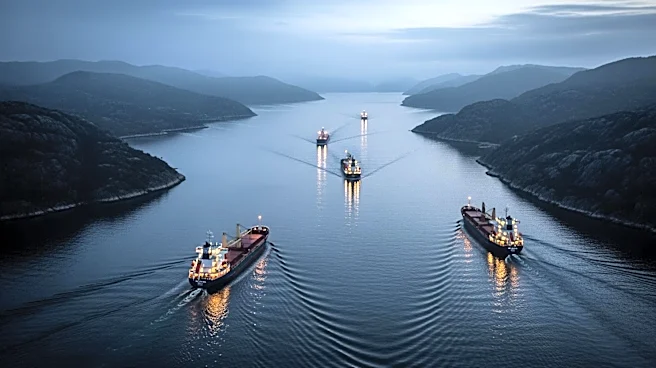
The Strait of Hormuz is experiencing increased throughput despite controlled access, according to a report by Windward. On March 30, six vessels with active AIS signals crossed the corridor, while additional movements likely occurred under dark conditions.
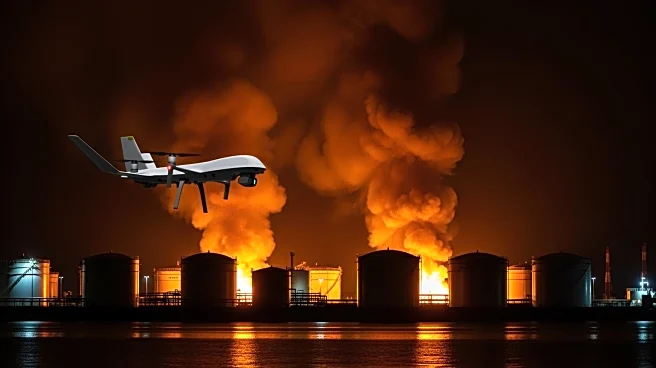
The report highlights a coordinated pattern of outbound energy exports and prioritized inbound food supplies, with China-Iran trade flows remaining active. Twenty-four AIS-dark vessels were identified, operating under Iran-controlled access. These include tankers loading petroleum products and vessels discharging grain and agricultural inputs. The report also notes that global oil flows face pressure due to opaque logistics networks and disruptions at Russia's Ust-Luga port. A recent strike on a VLCC near Dubai further underscores the growing risks in Gulf waters.
Why It's Important?
The increased activity in the Strait of Hormuz, a critical chokepoint for global oil transportation, has significant implications for international energy markets. The controlled access and dark vessel operations suggest a strategic maneuvering by Iran to maintain its export capabilities despite international sanctions. This situation could lead to heightened tensions in the region, affecting global oil prices and supply chains. The involvement of China in these trade flows indicates a strengthening of Sino-Iranian economic ties, potentially altering geopolitical dynamics. The ongoing risks to infrastructure and vessels in the Gulf could escalate into broader conflicts, impacting global trade and security.
What's Next?
The situation in the Strait of Hormuz is likely to remain tense, with potential for further disruptions to oil flows. Stakeholders, including international oil companies and governments, may need to reassess their strategies to mitigate risks associated with the region. Increased diplomatic efforts might be necessary to address the underlying geopolitical tensions. Monitoring of AIS-dark activities and enforcement of maritime regulations could become more stringent to ensure safe passage through the strait. The international community may also explore alternative routes or sources to diversify energy supplies and reduce dependency on the Gulf region.