


What's Happening?
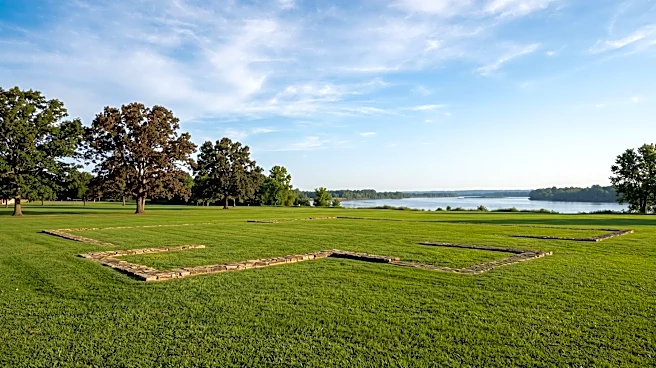
The National Park Service (NPS) has rejected a proposal by Fort Smith businessman Carl Corley to rebuild the original Fort I at the Fort Smith National Historic Site. Corley offered to spend up to $3 million of his own money to reconstruct the 1817 fort
on Belle Point, using historic archives for accuracy. The NPS cited several reasons for its decision, including concerns that rebuilding would disturb and damage the site's archaeological resources, diminishing its cultural value and integrity. J. Adam Beeco, Fort Smith National Historic Site superintendent, stated that historical evidence is insufficient to support a reconstruction that meets preservation standards without significant conjecture. Additionally, the project would require approvals from the Advisory Council on Historic Preservation, the State Historic Preservation Office, and consultation with affected Native American Tribes. Corley, however, is not deterred and has sought assistance from Arkansas's congressional delegation, including U.S. Senator Tom Cotton and U.S. Representative Steve Womack, to help navigate the federal government and potentially overturn the NPS decision.
Why It's Important?
This decision highlights the ongoing tension between historical preservation and economic development, particularly in areas with significant archaeological and cultural layers. The NPS's stance reflects a commitment to maintaining the integrity of historical sites by prioritizing existing archaeological resources and adhering to strict preservation guidelines. While Corley's proposal aims to enhance tourism and bring history to life, the NPS argues that a reconstruction based on insufficient evidence could misrepresent the past and damage irreplaceable historical context. The involvement of congressional members like Representative Womack, who has offered to assist constituents in navigating federal agencies, underscores the political dimension of such local heritage projects. The outcome of this dispute could set a precedent for similar proposals at other national historic sites, influencing how historical authenticity is balanced with community desires for enhanced visitor experiences and economic benefits.
What's Next?
Carl Corley plans to continue his efforts to gain approval for the fort's reconstruction, indicating he is not accepting the NPS's initial rejection. He intends to pressure federal officials and lobby for the project, potentially leveraging the support of Arkansas's congressional delegation. Representative Womack has stated his office is available to help Third District Arkansans navigate federal agencies, including the NPS and the Department of the Interior, suggesting he may facilitate further discussions or interventions. Corley also hopes for public support to pressure federal officials. The NPS has indicated that proposals can be resubmitted, implying that a revised plan addressing their concerns, particularly regarding archaeological disturbance and historical accuracy, might be considered. Future steps could involve further archaeological surveys, more detailed historical research, or alternative proposals that respect the site's existing integrity while still enhancing visitor engagement.
Beyond the Headlines
The debate over rebuilding Fort I touches upon deeper questions about how historical narratives are constructed and presented to the public. The NPS's emphasis on preserving 'layers of history' and avoiding 'minimal conjecture' reflects a modern approach to heritage management that values authenticity and the protection of archaeological evidence over potentially speculative reconstructions. This contrasts with earlier practices where historical sites were sometimes rebuilt with less rigorous adherence to original forms. The involvement of Native American Tribes in the consultation process, as noted by the NPS, also highlights the increasing recognition of indigenous perspectives in heritage management and the need to consider all historical layers, including pre-colonial settlements. This case exemplifies the complex ethical and methodological challenges inherent in interpreting and presenting history, particularly when private funding and local economic interests intersect with federal preservation mandates.