




What's Happening?
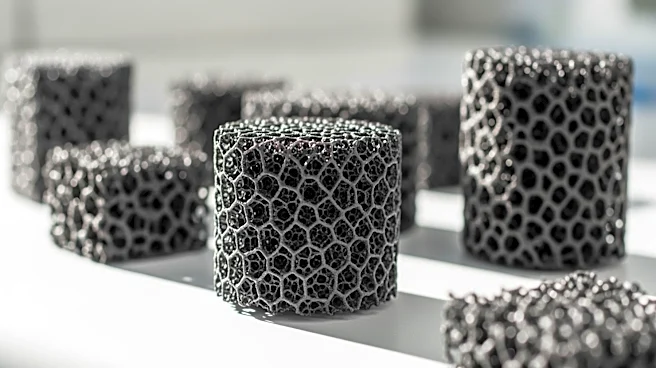
Researchers at Chiba University have developed a new carbon material that significantly reduces the cost and energy requirements for capturing carbon dioxide (CO2). The material, known as 'viciazites', features controlled nitrogen structures that enhance
CO2 capture efficiency at lower temperatures. This innovation addresses the high energy demands of traditional carbon capture methods, such as aqueous amine scrubbing, which require heating to over 100°C. The new material allows for CO2 desorption at temperatures below 60°C, potentially utilizing industrial waste heat to further reduce costs.
Why It's Important?
The development of more efficient carbon capture materials is crucial in the fight against climate change. By lowering the cost and energy requirements, this new technology could facilitate wider adoption of carbon capture solutions, helping to reduce greenhouse gas emissions. The ability to use industrial waste heat for CO2 desorption could make this approach economically viable for large-scale applications, potentially transforming industries reliant on fossil fuels. This advancement not only supports environmental goals but also offers economic benefits by reducing operational costs for companies implementing carbon capture technologies.