
What's Happening?
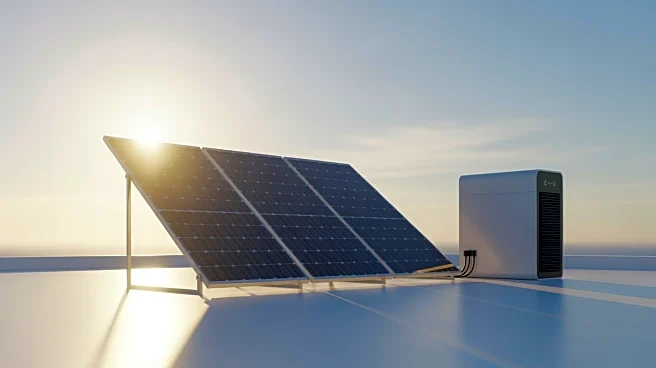
The Department of Energy in Abu Dhabi has launched a new policy allowing residents and businesses to generate their own electricity using solar panels and battery energy storage systems. Effective February
5, 2026, the policy, titled 'Use of Solar Photovoltaic and Battery Energy Storage Systems for Self-Supply,' aims to support the emirate's Net Zero goals. It provides a framework for installing Distributed Photovoltaic (DPV) systems and Battery Energy Storage Systems (BESS), offering clear guidelines for installation, licensing, and grid connection. The initiative encourages energy efficiency and aims to reduce dependence on the main grid, potentially lowering energy bills for consumers.
Why It's Important?
This policy is a significant step towards Abu Dhabi's clean energy transition, promoting sustainability and reducing environmental impact. By enabling self-supply of electricity, the policy empowers consumers to participate in the clean energy movement, potentially leading to widespread adoption of solar technology. This could decrease demand on large power plants, reducing the need for costly infrastructure upgrades and supporting long-term sustainability goals. The policy also emphasizes energy efficiency, encouraging the use of energy-efficient appliances and improved building performance, which can further reduce electricity consumption and environmental impact.
What's Next?
The Department of Energy plans to review the policy annually to ensure alignment with Abu Dhabi's evolving energy goals. As more residents and businesses adopt solar and battery systems, the policy's impact on the energy market and grid stability will be closely monitored. The introduction of strict technical and operational standards aims to ensure safety and reliability, balancing innovation with grid stability. The policy's success could serve as a model for other regions seeking to implement similar clean energy initiatives, potentially influencing global energy policies and practices.