




What's Happening?
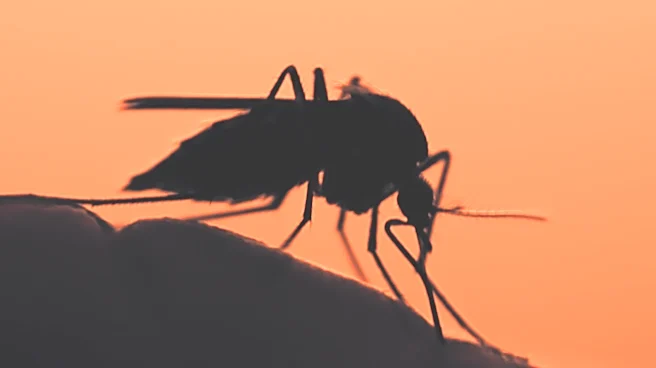
City officials in Great Bend are continuing their efforts to combat mosquito populations, even as Thanksgiving and Christmas approach, due to an extended mosquito season. Public Works Director David Dunekack explained that the city employs a dual-product
strategy for nighttime spraying: one product kills adult mosquitoes, while the other acts as a sterilant. The city is divided into east and west sections, with the application of these products rotated weekly to prevent mosquitoes from developing immunity. This year's increased mosquito presence is attributed to late precipitation and cooler weather, which has allowed adult mosquitoes to live longer and produce multiple generations simultaneously, according to Alicia Boor, agriculture and natural resources agent in the Cottonwood District of K-State Extension.
Why It's Important?
The prolonged mosquito season and the city's intensified control measures highlight a growing public health concern in Great Bend. Mosquitoes are not merely a nuisance; they can transmit diseases, making effective population control crucial for community well-being. The city's strategic use of rotating pesticides demonstrates an adaptive approach to pest management, aiming for long-term effectiveness. For residents, the extended season means a continued risk of bites and potential exposure to mosquito-borne illnesses, underscoring the importance of personal protective measures. The situation also points to the broader impact of changing weather patterns on local ecosystems and public health infrastructure, potentially increasing the burden on municipal services.
What's Next?
Great Bend will likely continue its nighttime spraying program as long as weather conditions permit mosquito activity. Residents are encouraged to actively participate in mosquito control by eliminating standing water around their homes, such as in old tires, bird baths, and gutters, and by using local pesticide applications. The ongoing efforts will aim to reduce mosquito populations and mitigate health risks. The experience from this extended season may lead to a reevaluation of annual mosquito control budgets and strategies for future years, especially if similar weather patterns persist.
Beyond the Headlines
The extended mosquito season in Great Bend serves as a localized example of how climate shifts can impact public health and municipal operations. Cooler temperatures and late precipitation, while seemingly minor environmental changes, can disrupt natural cycles and create conditions favorable for pest proliferation. This situation could prompt broader discussions about climate resilience at the local government level and the need for adaptable public health strategies. Furthermore, it emphasizes the interconnectedness of environmental factors, public health, and community engagement in managing such challenges, highlighting the role of individual actions in supporting collective well-being.