








What's Happening?
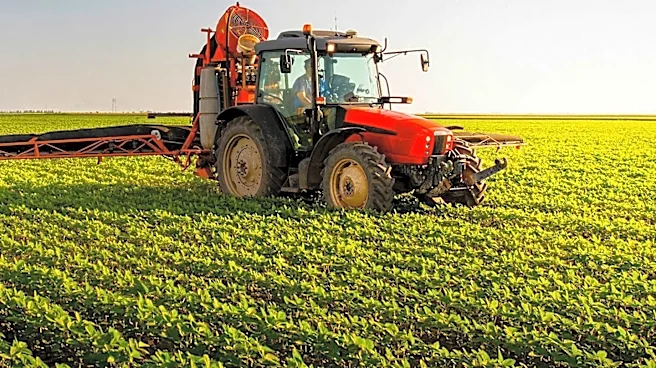
U.S. farmers are increasingly opting to repair and maintain older tractors, combines, and other agricultural machinery instead of purchasing new upgrades, a trend driven by a challenging farm economy. High fertilizer and fuel costs are making it difficult
for farmers to turn a profit, with the U.S. Department of Agriculture estimating a decline in farm income this year. Concurrently, farm equipment prices have surged since 2020 and remain near historic highs, with new combines and sprayers costing between $600,000 and $1 million. This economic squeeze has led to a significant drop in new equipment sales, with combine sales down 50% and tractor sales falling 20% compared to the previous year, according to the Association of Equipment Manufacturers. Farmers like Dennis Kellogg are utilizing decades-old equipment and parts, often repairing them themselves to save money, highlighting a shift towards maximizing the lifespan of existing assets.
Why It's Important?
This reliance on older machinery by U.S. farmers has significant implications for the agricultural sector and the broader economy. Economically, it reflects the severe financial pressures faced by farmers, impacting their ability to invest in new technologies that could boost efficiency and productivity. This trend can slow down the adoption of advanced farming techniques and equipment, potentially affecting long-term agricultural output and competitiveness. For equipment manufacturers, reduced sales of new machinery translate to lower revenues and potential job losses in the manufacturing sector. On the other hand, it creates a growing market for machinery repair services and aftermarket parts, supporting a different segment of the economy. Socially, it underscores the resilience and ingenuity of farmers who are finding innovative ways to sustain their operations amidst adversity, often by leveraging their mechanical skills and community networks. This situation also highlights the need for policies that address the economic challenges faced by the agricultural community.
What's Next?
As economic pressures persist, U.S. farmers are likely to continue prioritizing the repair and maintenance of existing machinery. This trend may lead to increased demand for skilled machinery mechanics and specialized parts for older equipment. Farmers will also explore cost-effective technological upgrades that can be integrated into older machines, such as advanced sensors or GPS systems, to improve efficiency without the expense of entirely new equipment. Services like custom harvesting, which allow farmers to avoid large capital investments, may also see increased demand. Policymakers might consider initiatives to support farmers in maintaining their equipment or to alleviate the financial burden of new purchases. The agricultural industry will need to adapt to this shift, with manufacturers potentially focusing more on aftermarket support, parts availability, and modular upgrade solutions for their existing fleet. The long-term sustainability of farming operations will depend on a balance between cost-saving measures and the adoption of necessary technological advancements.
Beyond the Headlines
The widespread reliance on older farm machinery in the U.S. points to a deeper cultural and economic narrative within rural America. It highlights a return to self-sufficiency and resourcefulness, where farmers are becoming adept at maintaining and innovating with what they have, rather than constantly upgrading. This could foster a stronger sense of community among farmers, as they share knowledge and resources for repairs. Ethically, it raises questions about the accessibility of modern agricultural technology and whether its high cost creates an uneven playing field, potentially disadvantaging smaller farms. Environmentally, extending the life of machinery through repair aligns with sustainability goals by reducing waste and the demand for new manufacturing. However, older equipment might be less fuel-efficient or produce higher emissions, presenting a trade-off. This situation also underscores the vulnerability of the agricultural sector to market fluctuations and the critical need for robust support systems to ensure food security and the economic viability of farming communities.