







What's Happening?
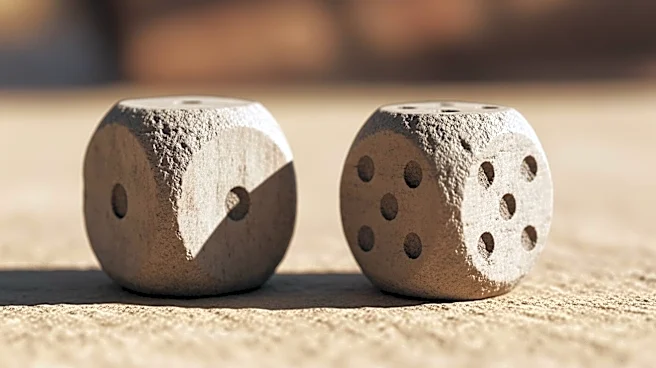
A study conducted by Colorado State University archaeologist Robert J. Madden has uncovered that Native American hunter-gatherers on the western Great Plains created the earliest known dice over 12,000 years ago. These findings, published in American Antiquity,
suggest that dice and games of chance were integral to Native American culture long before similar practices emerged in the Old World. Madden's research involved reclassifying older artifacts that had been misidentified, revealing that Native Americans were pioneers in the use of objects designed to produce random outcomes. The study identifies 15 dice associated with Folsom groups at the Lindenmeier site in Colorado, marking them as the only decorated artistic objects from that era.
Why It's Important?
The discovery of ancient dice by Native Americans challenges the traditional view that dice and probability were innovations of the Old World. This finding highlights the intellectual depth and complexity of prehistoric Native American societies, demonstrating their early engagement with concepts of chance and randomness. Madden's research suggests that these games served as a social technology, facilitating interaction and integration among disparate groups. This insight into the cultural practices of Native Americans provides a deeper understanding of their contributions to human history and the development of probability concepts.