





What's Happening?
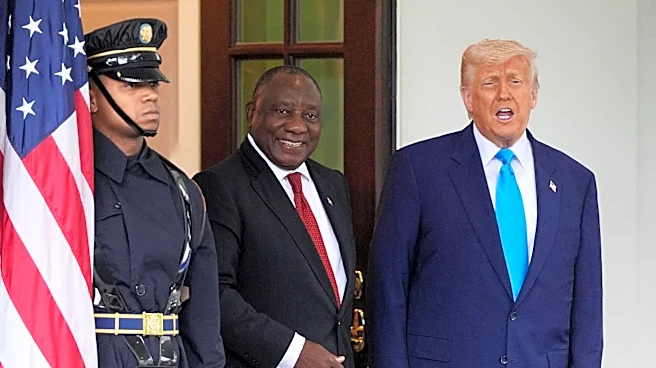
The Trump administration announced an increase in the U.S. refugee cap, specifically allowing an additional 10,000 white South Africans, known as Afrikaners, to enter the country. This decision raises the refugee cap to 17,500 for the fiscal year, focusing
solely on Afrikaners due to alleged persecution in South Africa. The administration cites an 'unforeseen emergency refugee situation' and blames the South African government for inciting racially motivated violence. This move has sparked criticism from Democrats, who argue that it prioritizes white refugees over others fleeing conflict and persecution worldwide.
Why It's Important?
The decision to prioritize Afrikaners in the U.S. refugee program has significant implications for U.S. immigration policy and international relations. It highlights a shift in refugee policy that may be perceived as racially biased, potentially affecting the U.S.'s global standing as a leader in humanitarian efforts. The focus on a specific ethnic group could lead to legal challenges and criticism from human rights organizations. Additionally, this policy may impact the U.S.'s diplomatic relations with South Africa and other countries concerned about equitable refugee treatment.
What's Next?
The administration may face legal challenges and increased scrutiny from both domestic and international entities regarding this policy shift. Congressional hearings and debates are likely as lawmakers seek to address concerns about the fairness and implications of the refugee cap increase. Advocacy groups may intensify efforts to support broader refugee admissions and challenge the administration's approach. The policy's impact on U.S.-South Africa relations will also be closely monitored, potentially influencing future diplomatic engagements.