

What's Happening?
Power has been successfully restored in Kalaupapa, Molokai, following an outage caused by Hurricane Nolo. State health officials are now coordinating the return of two Hansen's disease patients and approximately 50 staff members to the settlement by next
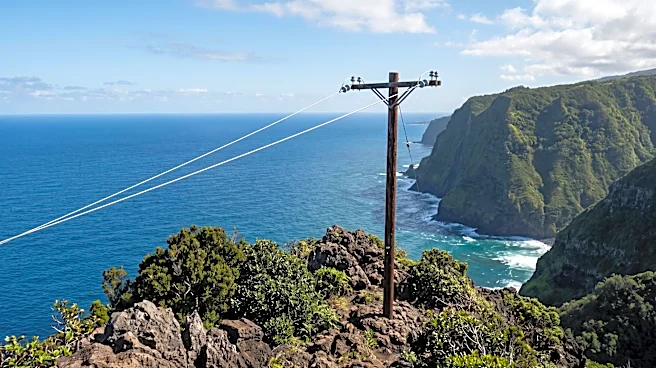
week. The community had been displaced since September 11 due to persistent issues with a malfunctioning water pump, which led to an initial evacuation. Although the water system had been fixed, a subsequent power outage on Sunday further delayed their return. Hawaiian Electric assisted the National Park Service (NPS) with repairs to a damaged power line along the Kalaupapa Pali, providing personnel, equipment, and helicopter support to address the conductor damage. The NPS owns and maintains the electrical system in Kalaupapa and coordinated the repair efforts, including securing access to the damaged line from a private property owner.
Why It's Important?
The restoration of power and the impending return of patients and staff to Kalaupapa are crucial for the well-being and continuity of care within this unique Molokai settlement. Kalaupapa is historically significant as a former Hansen's disease (leprosy) colony, and its remaining residents require specialized care and a stable living environment. The repeated disruptions, first from water supply issues and then a power outage, highlight the vulnerability of remote communities to infrastructure failures and natural disasters. The collaborative effort between state health officials, Hawaiian Electric, and the National Park Service underscores the importance of inter-agency cooperation in maintaining essential services for isolated populations. Ensuring the prompt and safe return of residents is vital for their health, comfort, and the preservation of the community's unique heritage.
What's Next?
State health officials are actively coordinating with the patients, staff, and other residents to facilitate their return to Kalaupapa, with the patients scheduled to be back early next week. The Department of Health (DOH) will continue to work with the National Park Service and other partners to ensure a safe and smooth transition back to the settlement. This will involve logistical arrangements for transportation and ensuring all necessary services are fully operational upon their arrival. The focus will be on re-establishing normal routines and providing ongoing support to the residents. Additionally, there may be a review of infrastructure resilience to prevent similar disruptions in the future, particularly concerning the electrical and water systems, given the recent challenges faced by the community.
Beyond the Headlines
The events in Kalaupapa underscore the broader challenges faced by remote and historically significant communities in maintaining modern infrastructure and services. The settlement's unique status as a former Hansen's disease colony, with a small population of elderly patients, adds a layer of complexity to disaster preparedness and response. The reliance on external agencies like Hawaiian Electric and the National Park Service for critical repairs highlights the interdependencies that sustain such isolated communities. This situation also brings to light the ethical considerations of caring for vulnerable populations in remote settings, ensuring their access to essential utilities and medical support, especially in the face of environmental challenges like hurricanes. The long-term implications involve developing more resilient infrastructure and robust emergency response plans tailored to the specific needs of Kalaupapa's residents.