





What's Happening?
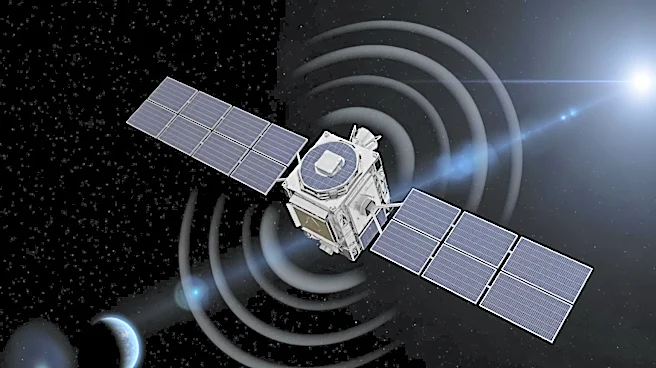
The Solar wind Magnetosphere Ionosphere Link Explorer (SMILE), a joint mission by the Chinese Academy of Sciences and the European Space Agency, is set to provide unprecedented real-time observations of Earth's magnetic field response to solar storms.
The mission, which began in 2015, aims to fill gaps left by previous missions by offering a global perspective on how solar wind interacts with Earth's magnetosphere. SMILE will use a soft X-ray imager to map the magnetosphere's boundaries, potentially improving predictions of geomagnetic storms that can disrupt satellite navigation and power grids.
Why It's Important?
SMILE's mission is significant for its potential to enhance the understanding and forecasting of geomagnetic storms, which pose risks to global communication systems and power infrastructure. By providing a comprehensive view of the magnetosphere's response to solar activity, SMILE could help prevent disruptions like the 1989 storm that caused a major power outage in Quebec. This mission represents a landmark collaboration between China and Europe in space science, highlighting the importance of international partnerships in addressing global challenges.
What's Next?
Although the launch of SMILE has been delayed due to technical issues, the mission is expected to proceed once these are resolved. The data collected by SMILE will be crucial for developing better forecasting models for geomagnetic storms, potentially allowing operators to mitigate the impact of such events. The mission's success could lead to further collaborations between international space agencies, advancing the field of space weather research.