What's Happening?
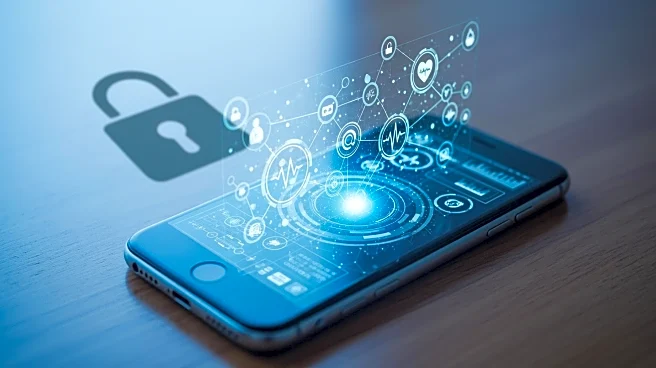
A recent study highlights the integration of blockchain and Internet of Things (IoT) technologies to improve the management of decentralized medical records. The system assigns unique IDs to patients and doctors,
ensuring secure access control and data integrity. Transactions are validated and recorded immutably on a blockchain ledger, enhancing data auditability. The framework supports remote patient monitoring by collecting data from IoT devices and storing it on a distributed ledger. This approach aims to address challenges in healthcare, particularly in regions with limited medical personnel and infrastructure, by enabling continuous patient monitoring and reducing unnecessary hospital visits.
Why It's Important?
The convergence of blockchain and IoT in healthcare could significantly impact patient data security and accessibility. By decentralizing data storage, the system reduces the risk of data breaches and unauthorized access, which are critical concerns in healthcare. This technology can improve healthcare delivery in underserved areas by facilitating remote patient monitoring, thus reducing the burden on healthcare facilities and minimizing infection risks. The integration of blockchain ensures data privacy and security, encouraging wider adoption of remote monitoring technologies. This development could lead to more efficient healthcare systems and better patient outcomes, particularly for chronic disease management.
What's Next?
The implementation of blockchain and IoT in healthcare is expected to expand, with potential applications in various medical fields. As the technology matures, it may lead to broader adoption of remote patient monitoring systems, especially in rural and underserved areas. Future developments could focus on enhancing data analytics capabilities to provide predictive health insights and inform policy-making. Additionally, regulatory frameworks will need to evolve to address privacy and security concerns associated with decentralized data management. The success of this integration could pave the way for similar applications in other sectors, such as finance and supply chain management.
Beyond the Headlines
The ethical and legal implications of using blockchain and IoT in healthcare are significant. Ensuring patient consent and data privacy will be crucial as these technologies become more prevalent. The shift towards decentralized data management may also influence healthcare policies and regulations, requiring updates to existing laws to accommodate new technological capabilities. Furthermore, the success of this integration could drive innovation in other industries, promoting the development of secure, decentralized systems for data management. As these technologies evolve, they may also contribute to broader societal changes, such as increased access to healthcare and improved public health outcomes.