



What's Happening?
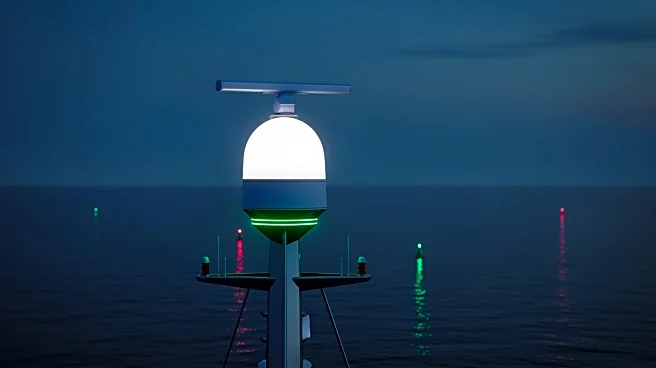
Researchers at Texas A&M University have developed SMART-SEA, a smart navigation assistant designed to prevent collisions between ships and stationary structures. Utilizing radar imaging and machine learning, the system provides real-time guidance to seafarers,
offering visual and audible data on maneuvering decisions. The system aims to enhance vessel safety by recommending optimal maneuvers without autonomously controlling the ship. The project has received initial funding from the U.S. Department of the Interior and the Department of Energy, with plans to expand testing and improve the system.
Why It's Important?
SMART-SEA represents a significant advancement in maritime safety technology, potentially reducing the risk of collisions and enhancing navigational efficiency. By integrating machine learning with radar data, the system offers precise guidance, which is crucial for the safety of vessels operating in complex marine environments. The development of such technology could lead to broader adoption across the maritime industry, improving safety standards and operational efficiency. Additionally, the system's adaptability for recreational vessels could democratize access to advanced navigation tools, promoting safer boating practices.