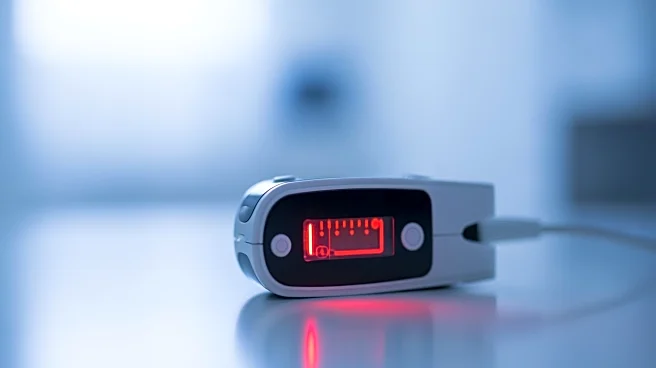




What's Happening?
A study funded by the Food and Drug Administration (FDA) aimed at understanding racial bias in pulse oximeter readings has produced unexpected results. The study, conducted by researchers at the University of California San Francisco, compared blood oxygen
levels measured by pulse oximeters and arterial blood gas tests in 631 patients. Contrary to previous studies, the new findings suggest that pulse oximeters underestimated oxygen levels, rather than overestimating them, in patients with darker skin tones. This result challenges the notion of applying a universal correction factor for these devices. The study, known as EquiOx, highlights the complexity of accurately measuring blood oxygen levels in diverse populations and underscores the need for further research. The FDA has yet to finalize its draft guidance on testing pulse oximeters, which proposes more rigorous testing on diverse skin tones.
Why It's Important?
The study's findings are significant as they question existing assumptions about racial bias in medical devices, particularly pulse oximeters, which are crucial in monitoring patients' oxygen levels. The unexpected results complicate efforts to address health disparities, especially during the COVID-19 pandemic when accurate oxygen level readings are vital. The study's outcome may influence future regulatory standards and testing protocols for medical devices, potentially affecting manufacturers and healthcare providers. The lack of conclusive guidance from the study leaves clinicians uncertain about how to adjust their practices to ensure equitable care. This development also highlights the broader issue of racial bias in healthcare technology, emphasizing the need for continued research and policy adjustments to address these disparities.
What's Next?
Researchers plan to continue studying pulse oximeter bias, with efforts to establish a lab in Uganda to recruit patients with darker skin tones. They aim to create a large dataset by collaborating with multiple research groups across the U.S. However, funding challenges may slow these efforts. The FDA is still reviewing comments on its draft guidance for pulse oximeter testing, and it remains unclear when final guidelines will be issued. The study's findings may prompt further investigations into other medical devices and their performance across different racial groups, potentially leading to broader regulatory changes and innovations in medical technology.