





What's Happening?
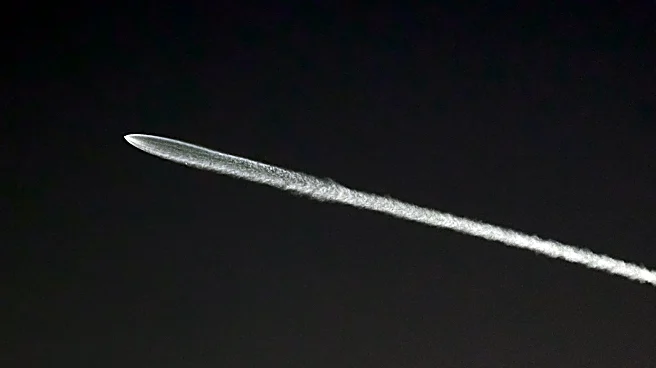
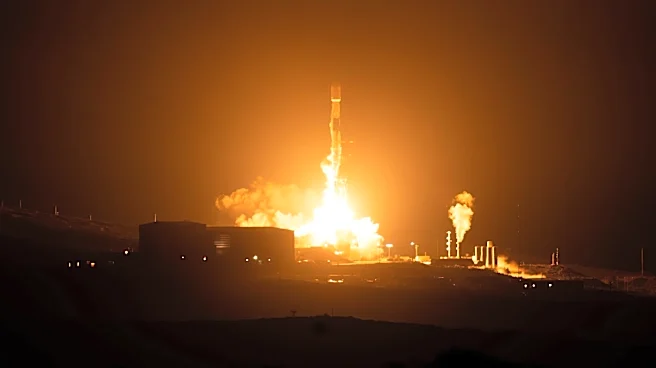
SpaceX successfully launched a Falcon 9 rocket from Vandenberg Space Force Base in California, deploying 21 satellites for the U.S. Space Force's Space Development Agency (SDA). The launch, which occurred on October 10 at 3:39 a.m. EDT, was the fourth
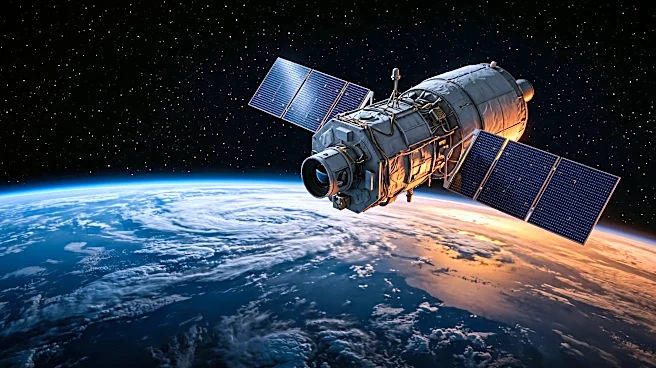
mission under the SDA's Tranche 1 program, part of the Proliferated Warfighter Space Architecture (PWSA). This network consists of optically connected satellites in low-Earth orbit designed to provide global military tactical communications and missile warning, indication, and tracking capabilities. The mission was delayed by five days from its original schedule due to an aborted attempt on October 5, though SpaceX did not disclose the specific reason for the delay. The Falcon 9's first-stage booster, designated B1103, successfully landed back at Vandenberg approximately seven minutes after liftoff, completing its sixth flight. The 21 satellites launched were manufactured by Northrop Grumman and are intended to provide secure, resilient, low-latency communications and data transport.
Why It's Important?
This launch is a critical step in building out the U.S. military's Proliferated Warfighter Space Architecture, a next-generation satellite network designed to enhance national security. The PWSA aims to create a resilient and interconnected mesh network in low-Earth orbit, reducing reliance on a few large, vulnerable satellites. This distributed approach improves the military's ability to maintain global communications and track missile threats, even in contested environments. For the U.S. military, this means more robust and secure communication channels, faster data transfer, and improved missile defense capabilities. For the aerospace industry, it highlights the increasing role of commercial space companies like SpaceX in supporting national defense initiatives. The successful reuse of the Falcon 9 booster also demonstrates the cost-effectiveness and efficiency of reusable rocket technology in deploying critical government assets, setting a precedent for future military space operations.
What's Next?
The Tranche 1 program is planned to include 154 operational satellites in total: 126 data-transport satellites and 28 missile-tracking satellites, with an additional four satellites for testing missile defense capabilities. With this latest launch, 84 of the 126 planned data-transport satellites have now been deployed. The SDA leverages a 'spiral development' approach, aiming to deploy new capabilities every two years in 'tranches' to continuously enhance the PWSA. Future launches will continue to build out this constellation, with the goal of providing initial operational capabilities to the Department of Defense by 2027. The ongoing deployment will focus on increasing the density and coverage of the network, ensuring that 95% of the globe is in view of at least two Tranche 1 Transport Layer satellites at any given time. This continuous deployment will further integrate space-based capabilities into military operations.
Beyond the Headlines
The development of the PWSA signifies a fundamental shift in military space strategy, moving towards a more resilient and distributed architecture. This approach has profound implications for space warfare and deterrence, as it makes the network less susceptible to single points of failure or attack. The use of optical inter-satellite links (OISLs) for data transfer is a key technological advancement, offering significantly lower latencies and improved security compared to traditional radio frequency crosslinks. This could revolutionize how military intelligence and communications are conducted globally. Furthermore, the collaboration between the U.S. military and commercial entities like SpaceX underscores a growing trend of public-private partnerships in national defense, potentially accelerating technological innovation and reducing costs. This model could become a blueprint for other nations seeking to enhance their space capabilities, leading to a more competitive and potentially militarized space domain.