
What's Happening?
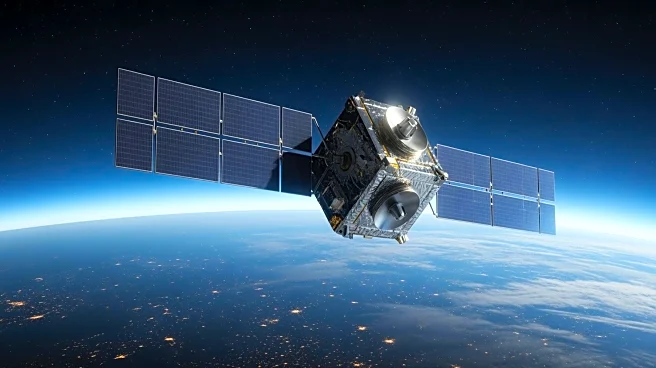
The Sentinel-5A satellite, launched in August 2025, has begun transmitting its first images, offering new insights into Earth's atmosphere. This satellite is equipped to map pollutants and gases, including
tracking the ozone hole over Antarctica. The European Environment Agency reports that the ozone layer, crucial for protecting life from harmful ultraviolet radiation, has been recovering slowly since the global ban on certain chemicals in 1989. However, ozone levels in polar regions remain below critical thresholds. Sentinel-5A also monitors nitrogen dioxide levels, particularly over industrialized areas, providing data essential for understanding air quality and pollution trends. The satellite's capabilities extend to capturing emissions from natural events like volcanic eruptions, contributing to a comprehensive understanding of atmospheric changes.
Why It's Important?
The data provided by Sentinel-5A is vital for environmental monitoring and policy-making. By offering real-time insights into air quality and pollution, the satellite aids in tracking the recovery of the ozone layer and the movement of harmful pollutants. This information is crucial for public health responses and environmental policies aimed at reducing pollution and mitigating its effects. The satellite's ability to monitor natural emissions, such as those from volcanoes, also helps in understanding their impact on the environment. Overall, Sentinel-5A enhances the global capacity to address environmental challenges and supports efforts to protect the atmosphere.