




What's Happening?
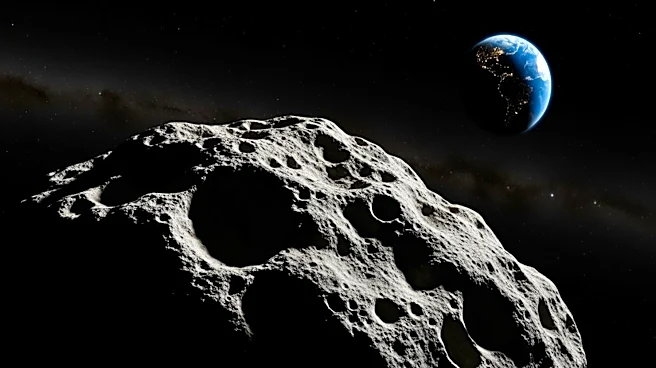
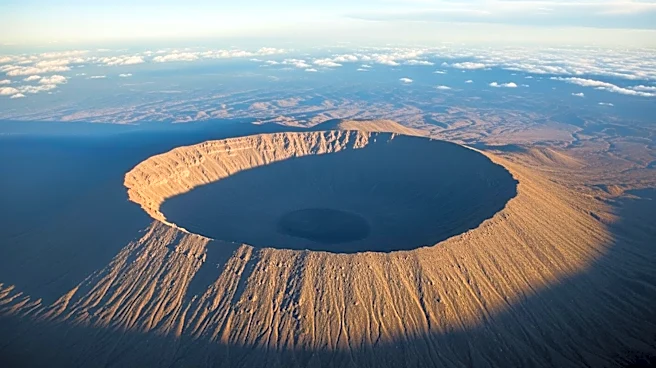
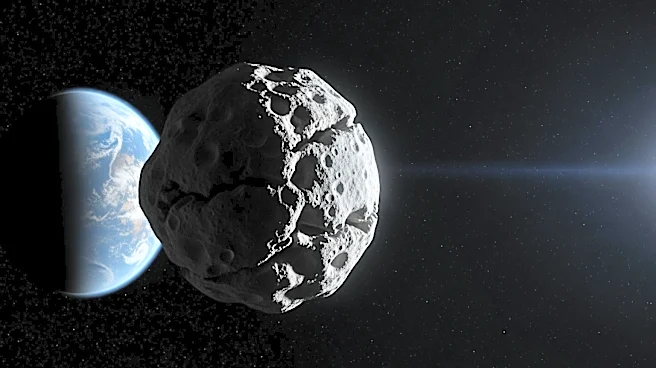
Recent studies have revealed that the Zhamanshin crater in Kazakhstan, formed by an asteroid impact approximately 900,000 years ago, is larger than previously thought. The crater's total radius, including ring structures, is now estimated at 26.5 km,
with the impact's force equating to 240,000 tons of TNT. This discovery raises questions about the asteroid's potential influence on Earth's climate, particularly during a period of climatic transition from an interglacial to a cooling phase. The findings, published in the Planetary Science Journal, suggest that the impact may have been more significant than previously believed.
Why It's Important?
Understanding the Zhamanshin crater's true size and impact force provides insights into the potential climatic effects of asteroid impacts. This research could influence how scientists assess the risks of future impacts and their possible consequences on global climate patterns. The study also highlights the importance of reexamining historical geological events to better understand their role in Earth's climatic history, which could inform current climate change models and predictions.
What's Next?
Further research is needed to determine the precise climatic effects of the Zhamanshin impact. Scientists may conduct more detailed studies of the crater's geological features and surrounding areas to gather additional data. This could involve advanced modeling techniques to simulate the impact's environmental effects. The findings may also prompt a reevaluation of other impact sites worldwide, potentially leading to new insights into Earth's climatic and geological history.
Beyond the Headlines
The study of the Zhamanshin crater offers a glimpse into the complex interactions between extraterrestrial impacts and Earth's climate. It raises questions about the resilience of early human populations to such events and the role of asteroid impacts in shaping the planet's evolutionary trajectory. This research could also contribute to broader discussions on planetary defense and the importance of monitoring near-Earth objects.