






What's Happening?
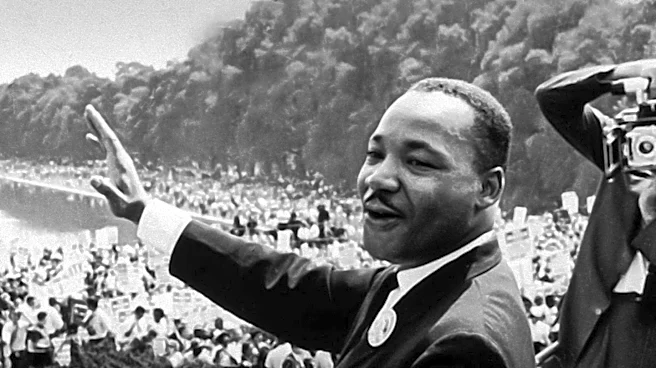
Bob Moses, a prominent figure in the Civil Rights Movement, is being recognized for his significant contributions, particularly as the program director for the Mississippi Freedom Trail - COFO Central Offices. From early 1963 through early 1965, Moses, alongside
assistant program director David Dennis, supervised this office, mentoring young activists and fostering a robust grassroots movement. The COFO (Council of Federated Organizations) office served as a central hub, coordinating the efforts of various activist groups including SNCC, NAACP, CORE, and SCLC. Moses's work was instrumental in building a strong foundation for civil rights advocacy in Mississippi, focusing on empowering local communities and individuals. His leadership helped organize and mobilize countless individuals who were fighting for equal rights and an end to segregation in the South.
Why It's Important?
Bob Moses's role in the Civil Rights Movement holds immense importance for U.S. society and its historical trajectory. His emphasis on grassroots organizing and mentorship was crucial in empowering disenfranchised communities, particularly in Mississippi, a state deeply entrenched in segregation. By building a strong local base, Moses and COFO enabled ordinary citizens to become active participants in the fight for their rights, shifting the paradigm from top-down leadership to community-driven change. This approach not only achieved tangible progress in civil rights but also cultivated a generation of leaders and activists. The legacy of his work continues to influence modern social justice movements, highlighting the power of community engagement and the enduring impact of dedicated mentorship in fostering societal change and democratic participation.
What's Next?
While Bob Moses's direct activism in the Civil Rights Movement is historical, his legacy continues to inspire contemporary efforts in social justice and community organizing. The principles he championed, such as grassroots empowerment and mentorship, remain relevant for current and future movements addressing systemic inequalities. Educational institutions and civil rights organizations are likely to continue highlighting his contributions, ensuring that his methods and impact are understood by new generations. The Mississippi Freedom Trail, where he served as program director, will continue to serve as a historical landmark, educating visitors about the struggles and triumphs of the Civil Rights Movement and the pivotal role individuals like Moses played in shaping American history.
Beyond the Headlines
Beyond the immediate historical context, Bob Moses's work illuminates deeper implications regarding democratic participation and educational equity. His efforts to register Black voters in Mississippi, despite immense opposition, underscored the fundamental right to suffrage and the power of the ballot box. Furthermore, his later work with the Algebra Project, aimed at improving math literacy among underserved youth, demonstrated his belief in education as a tool for empowerment and social mobility. Moses's life exemplified a commitment to long-term societal change, recognizing that true liberation requires not only political rights but also access to quality education and the ability for individuals to shape their own futures. His approach offers a model for addressing systemic issues through sustained community engagement and educational initiatives.