




What's Happening?
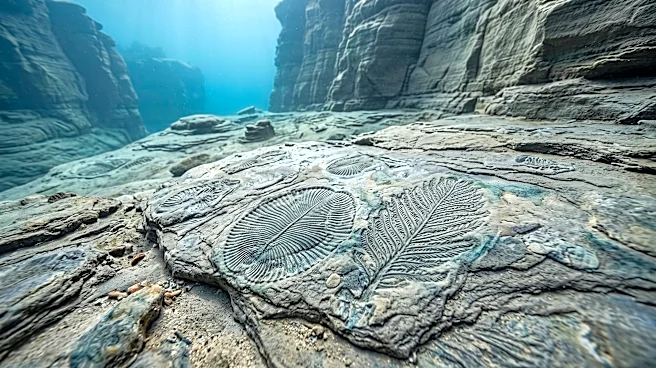
A recent study highlights the significant preservation of Ediacaran biota fossils within ancient underwater canyons in South Australia. These canyons, formed through a process of underwater erosion followed by subsequent flooding, created unique conditions
that protected these early complex life forms. The research specifically focuses on the Flinders Ranges, a region renowned for its diverse and exceptionally well-preserved Ediacaran fossils. The Ediacaran period, preceding the Cambrian explosion, is crucial for understanding the origins of multicellular life. The geological processes that led to the formation and subsequent inundation of these canyons played a pivotal role in safeguarding these delicate ancient organisms, offering scientists a clearer window into a critical evolutionary phase. The study underscores the importance of specific geological formations in the fossil record, providing insights into the environmental conditions that supported and preserved these early life forms.
Why It's Important?
The discovery and study of these well-preserved Ediacaran fossils in South Australia are of immense importance to paleontology and evolutionary biology. The Ediacaran biota represents some of the earliest known complex multicellular organisms, predating the rapid diversification of life during the Cambrian explosion. Understanding how these organisms lived, interacted with their environment, and were preserved provides crucial context for the subsequent evolution of animal life. The unique preservation in these underwater canyons offers a more complete picture of their morphology and ecological roles than might be found in other fossilization contexts. This research contributes to a broader understanding of Earth's early ecosystems and the environmental factors that influenced the emergence and survival of complex life, shedding light on the foundational stages of biological evolution.
What's Next?
Future research will likely involve more detailed analyses of the fossils found within these South Australian canyons, potentially revealing new species or more intricate details about known Ediacaran organisms. Scientists may also investigate other similar geological formations globally to determine if comparable preservation mechanisms exist elsewhere, which could lead to further discoveries of early life forms. The findings could also prompt new hypotheses about the environmental conditions prevalent during the Ediacaran period and how these conditions influenced the evolution of early life. Additionally, advanced imaging techniques and geochemical analyses could be employed to extract more information from the fossils and their surrounding rock matrices, providing deeper insights into their biology and paleoenvironment.
Beyond the Headlines
The exceptional preservation of Ediacaran fossils in these ancient canyons offers a rare glimpse into a pivotal moment in Earth's biological history, challenging previous assumptions about the complexity and diversity of life before the Cambrian explosion. This discovery highlights the serendipitous nature of fossilization and how specific geological events can create 'time capsules' of ancient ecosystems. It also underscores the ongoing scientific quest to understand the origins of life and the conditions that fostered its early diversification. The study implicitly emphasizes the fragility of early life forms and the unique circumstances required for their long-term preservation, providing a deeper appreciation for the geological processes that contribute to our understanding of evolutionary pathways.