







What's Happening?
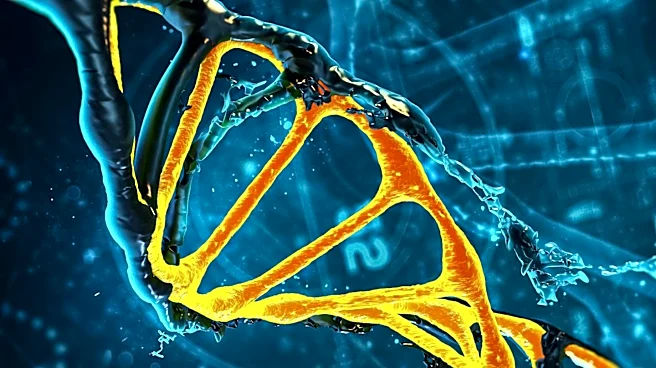
A team led by Nobel Laureate Jennifer Doudna has developed AI-designed gene scissors that surpass the precision of naturally evolved CRISPR systems. These synthetic nucleases, created using artificial intelligence, have shown higher efficiency in gene editing
across bacteria, plants, and human cells. The AI-modified enzymes can insert or delete target fragments more effectively than their natural counterparts. This breakthrough represents a significant advancement in genetic engineering, as it demonstrates the potential of AI to enhance the functionality of biological tools that have been refined over billions of years of evolution.
Why It's Important?
The development of AI-designed gene scissors marks a transformative moment in genetic engineering, with implications for medicine, agriculture, and biotechnology. By improving the precision and efficiency of gene editing, these tools could accelerate the development of therapies for genetic disorders, enhance crop resilience, and enable more sustainable agricultural practices. The ability to design enzymes that are more effective than natural versions could lead to significant advancements in personalized medicine and the treatment of complex diseases. This innovation also highlights the growing role of AI in scientific research, offering new possibilities for discovery and innovation.
What's Next?
The next steps for this technology involve further testing and validation in more complex biological systems. Researchers will likely conduct animal studies and clinical trials to assess the safety and efficacy of these AI-designed nucleases in therapeutic applications. Regulatory approval processes will be crucial in determining how quickly these tools can be integrated into medical and agricultural practices. The scientific community will continue to explore the potential of AI in protein design, potentially leading to new breakthroughs in various fields.
Beyond the Headlines
The use of AI in designing gene-editing tools raises important ethical and regulatory considerations. As these technologies become more advanced, there will be a need for robust oversight to ensure they are used responsibly and ethically. The potential for unintended consequences, such as off-target effects or ecological impacts, must be carefully managed. Additionally, the ability to create synthetic biological tools challenges existing frameworks for intellectual property and raises questions about the ownership and control of genetic technologies.