
What's Happening?
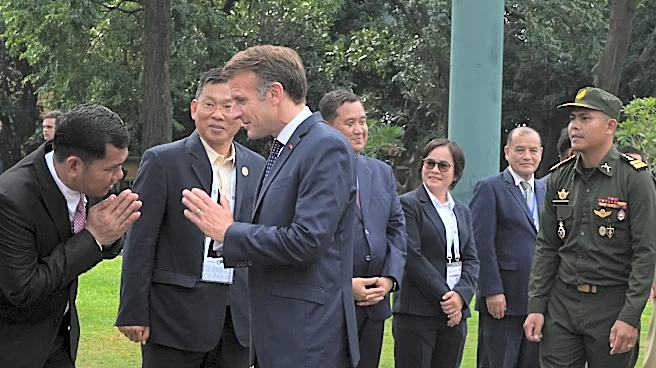
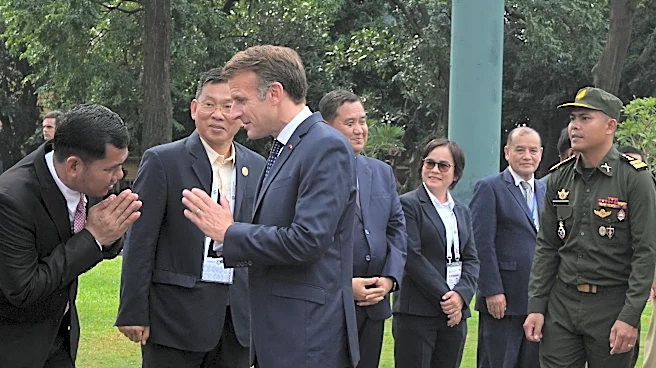
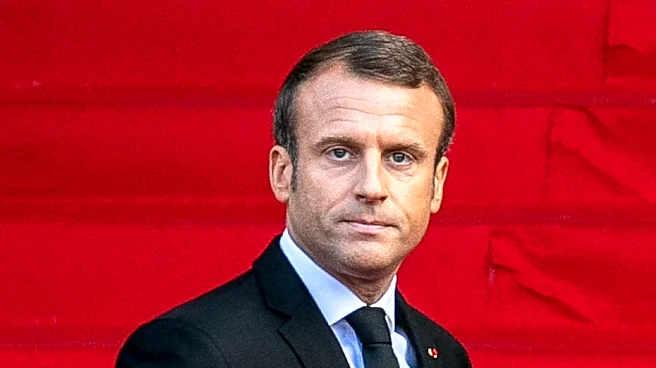
French President Emmanuel Macron arrived in Malaysia on Monday for a two-day official visit aimed at enhancing bilateral relations between the two nations. Accompanied by his wife, Brigitte Macron, and a delegation, President Macron landed at Kuala Lumpur
International Airport (KLIA) and was greeted by Digital Minister Gobind Singh Deo. The visit, extended at the invitation of Prime Minister Datuk Seri Anwar Ibrahim, marks President Macron's first to Malaysia since assuming office in May 2017. The agenda includes an official welcoming ceremony at the Sultan Abdul Samad Building and a bilateral meeting with Prime Minister Anwar, focusing on elevating Malaysia-France relations to a Strategic Partnership. The leaders are also expected to oversee the exchange of several memoranda of understanding (MOUs) across key sectors such as defense, higher education, critical minerals, and energy transition.
Why It's Important?
This visit underscores the growing strategic importance of Malaysia to France and the broader European Union, particularly in the Indo-Pacific region. Elevating relations to a Strategic Partnership signifies a deeper commitment to cooperation, which could have implications for regional stability and economic development. For the U.S., increased French engagement in Southeast Asia, especially in areas like defense and energy transition, aligns with broader efforts to promote a free and open Indo-Pacific. The MOUs in critical minerals and energy transition are particularly significant, as they address global supply chain resilience and climate change, areas of shared concern for major economies. The visit also highlights France's independent foreign policy initiatives and its role as a key player in global diplomacy, potentially influencing the geopolitical landscape.
What's Next?
Following the bilateral meeting, the exchange of MOUs will formalize cooperation in critical sectors, potentially leading to new trade agreements, investment opportunities, and collaborative projects. The focus on defense, higher education, critical minerals, and energy transition suggests a multi-faceted approach to strengthening ties. These agreements could result in increased French investment in Malaysia's economy, technology transfer, and educational exchanges. The visit is also expected to culminate in an official luncheon hosted by Prime Minister Anwar, further solidifying diplomatic relations. The outcomes of this visit will likely be closely watched by other regional and international powers, as they could set precedents for future engagements between European nations and Southeast Asian countries.
Beyond the Headlines
Beyond the immediate diplomatic and economic implications, this visit reflects a broader trend of European nations, including France, seeking to diversify their international partnerships and strengthen their presence in dynamic regions like Southeast Asia. This strategic pivot is driven by a combination of economic interests, geopolitical considerations, and a desire to contribute to global governance. The emphasis on critical minerals and energy transition also points to the evolving priorities in international relations, where resource security and climate action are becoming central to foreign policy. This engagement could foster greater multilateralism and provide alternative avenues for addressing global challenges, potentially reducing reliance on traditional power blocs and promoting a more balanced international order.