






What's Happening?
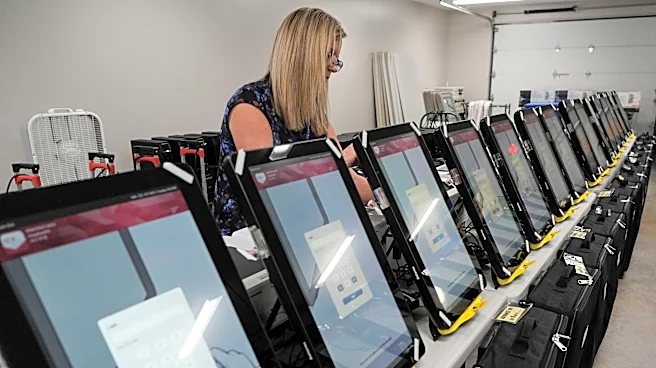
Georgia lawmakers have failed to pass a crucial bill that would have gradually replaced the state's touchscreen voting system with hand-marked paper ballots. The Senate's inaction leaves Georgia with computer-generated ballots that will soon be illegal,
as a state law mandates the elimination of QR-coded ballots by July 1, 2026. This development comes just months before the midterm elections, raising concerns about voter confusion and logistical challenges. The House had previously approved a bill to extend the deadline for eliminating QR codes until 2028, but the Senate did not vote on it. Election officials now face the daunting task of preparing for a potential transition to pre-printed ballots, which could involve significant training and voter education efforts.
Why It's Important?
The failure to pass the bill has significant implications for Georgia's election process, potentially affecting millions of voters. The transition to a new voting system without a clear plan or funding could lead to widespread confusion and logistical issues at polling places. This situation underscores the challenges of implementing election reforms in a politically charged environment. The decision not to act may also impact public confidence in the electoral process, as concerns about the security and accuracy of QR-coded ballots remain unresolved. The outcome of this legislative impasse could influence future election policies and the broader national conversation on voting system integrity.
What's Next?
With the legislative session concluded, it is unclear how Georgia will address the impending deadline for eliminating QR-coded ballots. Governor Brian Kemp may consider calling a special session to resolve the issue. Election officials will need to explore options for implementing a new voting system, including the procurement and testing of new machines. The situation requires urgent attention to ensure a smooth transition and to maintain voter confidence in the upcoming elections. Stakeholders, including political leaders and election officials, will need to collaborate to find a viable solution that addresses both logistical and security concerns.