
What's Happening?
NASA has successfully launched its DiskSat technology demonstration mission to low Earth orbit. The mission aims to test a new small spacecraft platform that features a flat, disk-shaped design, which
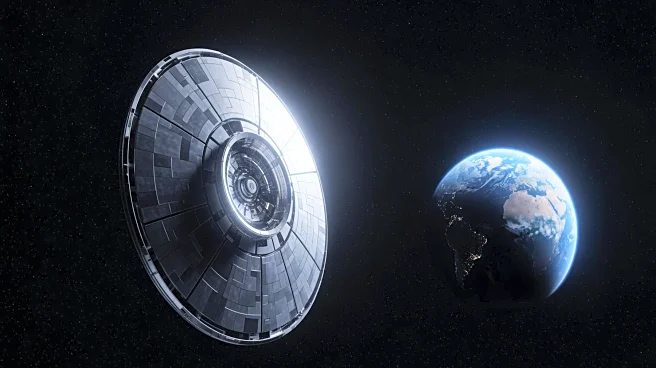
is expected to expand the capabilities of current small spacecraft. The DiskSat, launched aboard a Rocket Lab Electron rocket from Wallops Island, Virginia, is designed to offer a lower-cost alternative to traditional CubeSat designs. The spacecraft, each measuring 40 inches in diameter and one inch thick, are equipped with electric propulsion systems for orbit changes and maintenance. This design is particularly suited for operations in very low Earth orbit, which can enhance Earth imaging and communication capabilities. The mission is a collaborative effort led by The Aerospace Corporation, with funding from NASA's Small Spacecraft & Distributed Systems program and support from the U.S. Space Force's Rocket Systems Launch Program.
Why It's Important?
The DiskSat mission represents a significant advancement in small spacecraft technology, potentially transforming how space missions are conducted. By providing a more cost-effective and flexible platform, DiskSats could broaden scientific opportunities and increase access to space for various stakeholders, including NASA, commercial space industries, and academic institutions. This innovation supports NASA's long-term exploration goals for the Moon and Mars, as well as efforts to better understand Earth. The success of this mission could lead to more frequent and diverse space missions, fostering innovation and growth in the U.S. space industry.
What's Next?
Following the successful launch, the DiskSat spacecraft will undergo in-orbit testing to evaluate their performance and the effectiveness of the specialized dispenser mechanism. These tests will determine the viability of the DiskSat design for future missions. If successful, this technology could be adopted for a wide range of applications, including Earth observation and communication missions. The results of this demonstration will inform future developments in small spacecraft technology and could lead to new mission opportunities for NASA and its partners.