





What's Happening?
President Trump has publicly criticized Canada for its handling of forest management, particularly in relation to the ongoing forest fires in the Boundary Waters area along the Minnesota-Ontario border. Trump accused Canada of 'Willful Negligence' in maintaining
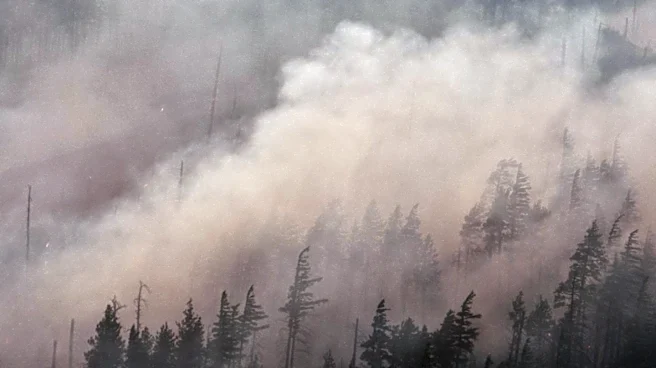
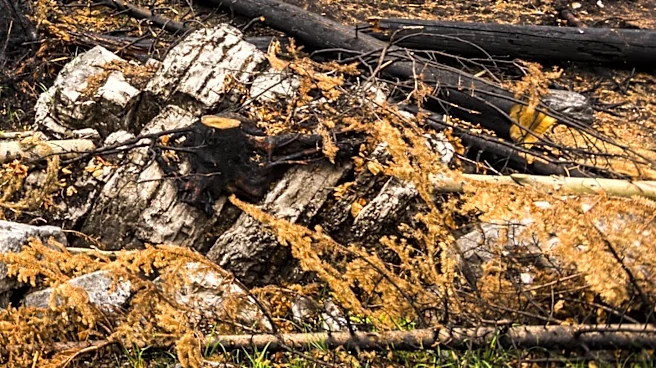
its forests, which he claims has resulted in polluted air affecting the United States. He suggested that the costs associated with this pollution should be added to the tariffs Canada currently pays. The Boundary Waters Canoe Area Wilderness, a significant U.S. wilderness region, is facing threats from both natural forest fires and potential man-made environmental impacts. The fires, sparked by lightning, have burned over 73,000 acres, with some spreading into Canada. Despite the natural causes of these fires, Trump has focused on Canada's forest management practices as a contributing factor to the air quality issues in the U.S.
Why It's Important?
The criticism from President Trump highlights ongoing tensions between the U.S. and Canada regarding environmental management and trade. The suggestion to increase tariffs could have significant economic implications, potentially affecting trade relations and economic stability between the two countries. Additionally, the focus on forest management practices underscores the broader debate on environmental responsibility and cross-border impacts of natural disasters. The Boundary Waters area is a critical natural resource, and its preservation is vital for ecological balance and tourism. The potential increase in tariffs could also impact industries reliant on cross-border trade, leading to broader economic consequences.
What's Next?
The situation may lead to further diplomatic discussions between the U.S. and Canada regarding environmental policies and trade agreements. Stakeholders, including environmental groups and trade organizations, may push for negotiations to address the underlying issues of forest management and air quality. The U.S. government may also face pressure to reassess its environmental policies and international trade strategies in light of these developments. The ongoing legal and legislative battles over mining rights in the Boundary Waters area could also influence future policy decisions.
Beyond the Headlines
The controversy raises questions about the balance between economic interests and environmental preservation. The potential for increased tariffs as a punitive measure against environmental practices could set a precedent for how countries address cross-border environmental issues. This situation also highlights the challenges of managing natural resources in a way that respects both national sovereignty and global environmental responsibilities.