








What's Happening?
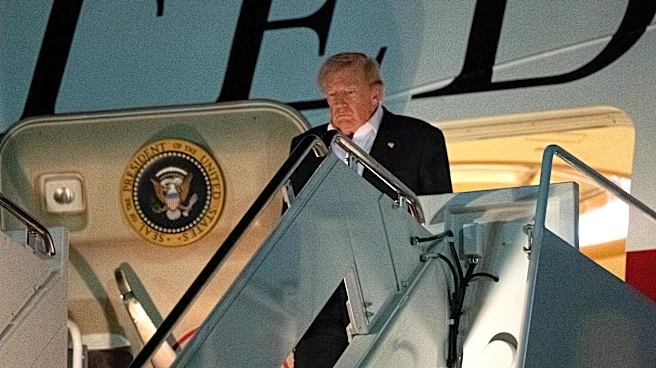
President Trump has come under scrutiny following revelations that he promoted companies on his Truth Social account shortly after purchasing their stocks. A CNN investigation found that Trump has promoted over 20 companies on his social media platform
days after buying stock in those firms. This has raised questions about potential conflicts of interest, as Trump has not placed his assets in a blind trust, unlike his predecessors. His financial disclosures reveal over 21,000 financial transactions in 2025, primarily involving stock trades. The White House maintains that Trump has no control over his investments, which are managed by independent third-party financial institutions. Despite this, the overlap between his stock purchases and social media posts has led to concerns about the appearance of impropriety.
Why It's Important?
The situation highlights ongoing debates about the ethical standards for elected officials, particularly regarding financial transparency and conflicts of interest. Trump's actions have sparked discussions about whether presidents should be subject to the same stock trading restrictions as members of Congress. The potential for perceived conflicts of interest could erode public trust in government officials, especially when financial gains are involved. This issue is particularly significant as it touches on the broader theme of accountability and transparency in public office, which is crucial for maintaining democratic integrity.
What's Next?
As the debate continues, there may be increased pressure on lawmakers to introduce legislation that addresses stock trading by high-ranking officials, including the president. This could lead to new regulations aimed at preventing conflicts of interest and ensuring greater transparency. Additionally, public and media scrutiny of Trump's financial activities is likely to persist, potentially influencing public opinion and political dynamics.