








What's Happening?
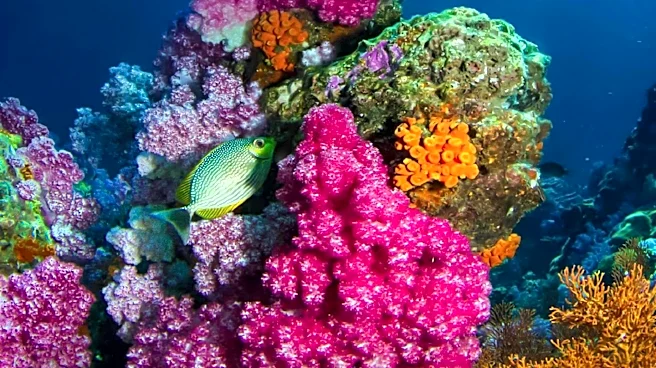
The United Nations Regional Information Centre (UNRIC), in partnership with the Flanders Chancellery and Foreign Office, hosted a screening of the documentary 'De Wilde Noordzee' (North Sea, Nature Untamed) at Ciné-ONU in Brussels. Filmmaker Peter van
Rodijnen presented his work, emphasizing the need to foster appreciation and protection for the North Sea's marine life. The event served as a precursor to United Nations Day on October 24 and the upcoming 2026 UN Water Conference, scheduled for December 8-10. Following the screening, a panel discussion took place, featuring experts such as Vera Coelho, Executive Director and Vice President of Oceana in Europe; Jan Mees, General Director of the Flanders Marine Institute (VLIZ); and Nicolas Galudec, Senior Policy Advisor at the UN Environment Programme (UNEP) Brussels Office. The discussion focused on critical themes including ocean protection, marine research, and international cooperation, highlighting the interconnectedness of marine ecosystems and the necessity of collective action.
Why It's Important?
The event underscores the growing international concern for ocean health and the urgent need for coordinated global efforts to address marine environmental challenges. The North Sea, often perceived as a 'big brown bowl of soup,' as noted by the filmmaker, represents a microcosm of broader oceanic issues, including shifts in species distribution and the impact of human activities. The panel discussion brought together key stakeholders from environmental organizations, research institutions, and UN bodies, emphasizing the multidisciplinary approach required for effective ocean governance. The focus on sustainable fisheries, advanced marine research technologies like robotics and sensor systems, and the delicate balance of marine ecosystems highlights the scientific, economic, and ecological stakes involved. The call for stronger international cooperation, particularly in the lead-up to the 2026 UN Water Conference, signifies a concerted push towards developing and implementing evidence-based policies and financing mechanisms to protect marine and coastal areas.
What's Next?
The discussions and calls to action from the Ciné-ONU event are expected to feed into the broader agenda of the 2026 UN Water Conference. This upcoming conference will likely serve as a platform for further international dialogue and the development of concrete strategies for ocean protection and sustainable water management. Stakeholders, including governments, scientific communities, and environmental organizations, will continue to advocate for policies that ensure fishing remains within ecological limits, vulnerable species and habitats are protected, and transparency underpins fisheries management. The emphasis on technological advancements in marine science suggests a future where real-time data will increasingly inform decision-making and policy formulation. Furthermore, the ongoing UN Biodiversity Conference (COP17) and the High Seas Treaty are expected to strengthen ocean governance, with continued efforts to implement these agreements and foster international cooperation for the protection of marine ecosystems beyond national waters.
Beyond the Headlines
The event's focus on 'creating some love' for the North Sea speaks to a deeper cultural and ethical dimension of environmental conservation: the need to cultivate public appreciation and engagement. Beyond policy and scientific advancements, the long-term success of ocean protection hinges on a shift in public perception and a collective sense of responsibility. The interconnectedness of marine ecosystems, as highlighted by the 'one ocean' concept, implies that environmental degradation in one region can have far-reaching consequences globally, necessitating a holistic approach to conservation. The 'double technological revolution' in marine science, driven by robotics and sensor systems, not only offers new tools for research but also raises questions about data accessibility, ethical use of technology, and equitable distribution of scientific benefits. Ultimately, the event underscores that protecting the ocean is not merely an environmental issue but a complex challenge intertwined with economic development, social equity, and international relations, requiring sustained commitment and innovative solutions.