


What's Happening?
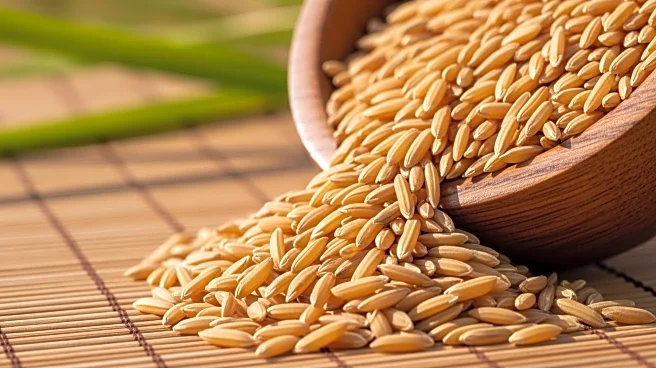
India has overtaken China to become the world's largest rice producer, with a total output of 150.18 million tonnes, according to Union Agriculture Minister Shivraj Singh Chouhan. This announcement was made during an event in New Delhi where the minister
also unveiled 184 new high-yielding seed varieties developed by the Indian Council of Agricultural Research (ICAR). These varieties are expected to boost crop production and enhance farmers' income. The minister highlighted that India has transformed from a food-deficient nation to a global food provider, now supplying rice to international markets. The new seed varieties are designed to be climate-resilient and resistant to major pests and diseases, addressing challenges such as climate change and soil salinity.
Why It's Important?
This development marks a significant milestone for India's agricultural sector, reflecting the country's progress in food security and agricultural innovation. By surpassing China in rice production, India strengthens its position in the global agricultural market, potentially increasing its influence in international trade. The introduction of high-yielding, climate-resilient seed varieties could lead to increased agricultural productivity and sustainability, benefiting farmers economically. This achievement also underscores the effectiveness of India's agricultural policies and research initiatives, which have focused on developing resilient crop varieties to meet the challenges posed by climate change and other environmental factors.
What's Next?
The focus will now be on ensuring that these high-quality seeds reach farmers across the country to maximize their benefits. The government and agricultural bodies are expected to work on improving seed distribution networks and providing support to farmers for adopting these new varieties. Additionally, there may be increased efforts to enhance the production of pulses and oilseeds to further boost India's self-sufficiency in food production. The success of these initiatives could lead to further advancements in agricultural technology and practices, potentially setting a precedent for other countries facing similar challenges.
Beyond the Headlines
The shift in rice production leadership from China to India could have broader geopolitical implications, influencing trade relations and agricultural policies globally. As India continues to innovate in agricultural practices, it may serve as a model for other developing nations looking to enhance their food security and agricultural sustainability. The emphasis on climate-resilient crops also highlights the growing importance of addressing environmental challenges in agriculture, which could lead to more collaborative international efforts in research and development.