
What's Happening?
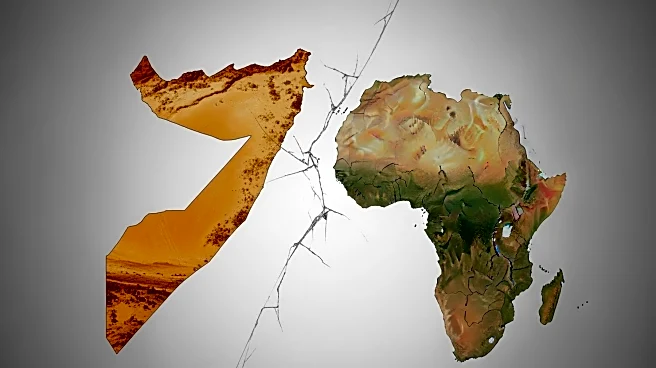
Israel has become the first country to formally recognize Somaliland as an independent state, a move that has been met with rejection from African regional governance bodies. Somaliland declared independence
from Somalia in 1991 but had not been recognized by any nation until Israel's recent declaration. The African Union and other regional bodies have condemned the recognition, emphasizing Somalia's sovereignty and territorial integrity. The decision is seen as a violation of international law and regional agreements. Israel's Prime Minister Benjamin Netanyahu has linked the recognition to the Abraham Accords, aiming to establish cooperation in various sectors with Somaliland. However, the move has been criticized for potentially undermining peace and stability in the region.
Why It's Important?
The recognition of Somaliland by Israel could have significant geopolitical consequences, potentially encouraging other separatist movements and altering the balance of power in the Horn of Africa. It highlights the challenges of international recognition and the complexities of statehood in regions with contested borders. The decision may strain Israel's relations with African nations and could lead to diplomatic isolation within the continent. It also underscores the strategic use of diplomatic recognition as a tool for expanding influence and forging new alliances, as seen in the context of the Abraham Accords.
What's Next?
The rejection by African regional bodies suggests that there will be continued diplomatic efforts to counter Israel's recognition of Somaliland. The situation may lead to increased tensions between Somalia and Somaliland, with potential implications for regional security. Israel may need to engage in diplomatic negotiations to address the concerns of African nations and mitigate potential backlash. The international community, including the United Nations, may play a role in mediating the dispute and ensuring that regional stability is maintained.