






What's Happening?
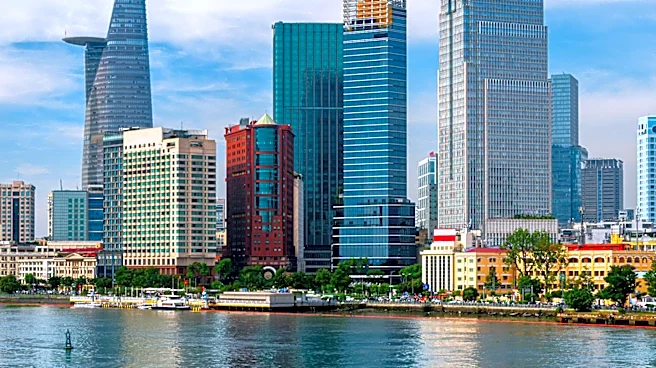
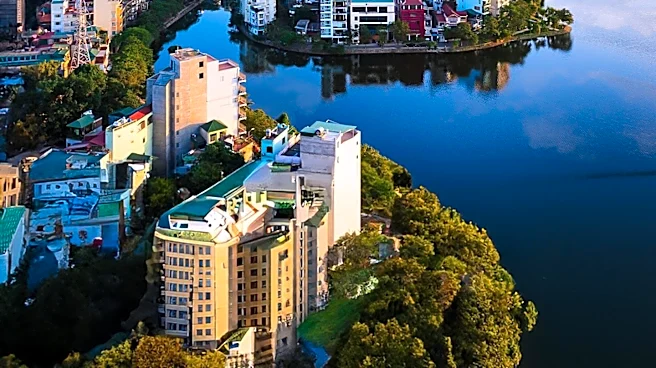
Hanoi, Vietnam, is undergoing a significant transformation as part of a broader push for economic growth and modernization. The city has invested $2.4 billion in the first half of 2026 to clear land for nearly 1,500 projects, aiming to create an ultramodern
urban landscape. This redevelopment includes flood controls and measures to reduce air pollution, addressing the challenges posed by climate change. However, the rapid pace of construction has led to the demolition of homes and businesses, displacing residents like Nguyen Thi Nhan, who lost her home to make way for new infrastructure. The redevelopment plans feature a $28 billion project along the Red River, which will include new roads, parks, and urban districts. Despite the promise of progress, the construction boom raises concerns about rising property prices and the potential for economic instability.
Why It's Important?
The redevelopment of Hanoi is crucial for Vietnam's economic ambitions, as it seeks to attract foreign investment and create new opportunities for residents and businesses. However, the rapid pace of change poses risks, including the potential for increased property prices and financial instability if the real estate market weakens. The construction boom could divert resources from high-tech industries, which are vital for Vietnam's long-term economic growth. Additionally, the displacement of residents and the loss of historical and cultural sites raise ethical and social concerns. The transformation of Hanoi reflects broader trends in urban development across Asia, where modernization efforts often clash with the preservation of cultural heritage and community livelihoods.
What's Next?
As Hanoi continues its transformation, the city faces the challenge of balancing modernization with the preservation of its cultural and historical identity. Authorities must address the concerns of displaced residents and ensure fair compensation and resettlement options. The success of Hanoi's redevelopment will depend on effective coordination among government agencies and the ability to execute complex projects involving land acquisition and relocation. The city's experience may serve as a model for other Asian cities facing similar challenges, highlighting the need for sustainable and inclusive urban development strategies.
Beyond the Headlines
The redevelopment of Hanoi raises questions about the long-term impact on the city's social fabric and cultural identity. The loss of traditional neighborhoods and the displacement of communities could lead to a homogenization of urban life, erasing the unique character of the city. The situation underscores the importance of involving local communities in planning processes and finding ways to integrate modern infrastructure with historical preservation. As cities around the world grapple with similar challenges, Hanoi's experience highlights the need for thoughtful and inclusive approaches to urban development.