

What's Happening?
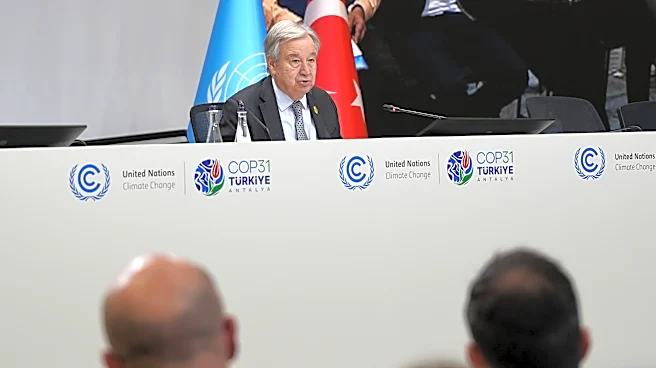
Türkiye has positioned its Zero Waste Movement as a central theme at the COP31 climate conference in Antalya, aiming to make waste reduction a global priority. First Lady Emine Erdoğan launched the national movement in 2017, which seeks to promote sustainable
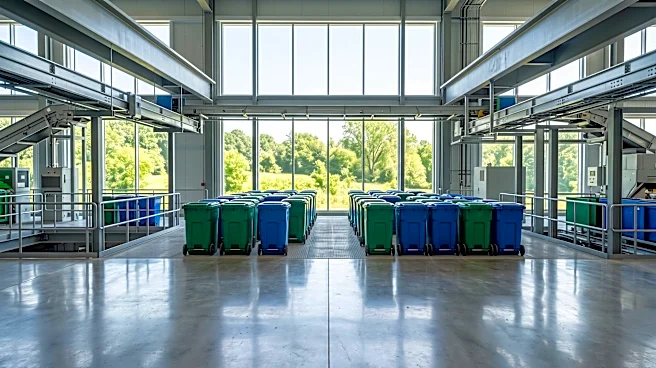
waste management practices across public institutions, schools, local authorities, and businesses. The initiative encourages reuse, recycling, and reduced consumption. Since its inception, Türkiye's waste recovery rate has increased from 13% in 2017 to 37.53% in 2025, with a target of 60% by 2035. The country has also provided waste management training to 28 million people. The UN General Assembly adopted a resolution proposed by Türkiye in 2022, establishing March 30 as the International Day of Zero Waste, and UN Secretary-General António Guterres formed an Advisory Board of Eminent Persons on Zero Waste, chaired by Emine Erdoğan, in 2023.
Why It's Important?
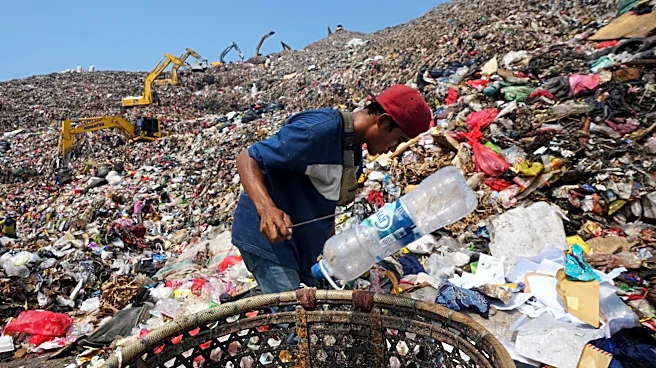
The elevation of Türkiye's Zero Waste Movement to a global priority at COP31 signifies a growing international recognition of waste management as a critical component of climate action. The UN Environment Programme estimates that global municipal waste could soar from 2.1 billion tonnes annually to 3.8 billion tonnes by 2050, highlighting the urgency of such initiatives. By focusing on a circular economy, which aims to keep products and materials in use longer, the movement addresses the environmental impact of extracting and processing raw materials, as well as the greenhouse gas emissions from waste decomposition. Food waste, in particular, is a significant concern, with 1.05 billion tonnes generated globally in 2022, contributing to methane emissions. Türkiye's experience and leadership in this area could inspire other nations to adopt similar strategies, fostering international cooperation and potentially leading to a reduction in global waste generation and associated environmental damage.
What's Next?
At COP31, Emine Erdoğan is scheduled to lead a high-level roundtable discussion on zero waste, the circular economy, and methane. Further sessions will explore how cities and businesses can reduce food waste and methane emissions, redirect discarded food to those in need, and measure progress towards a circular economy. The COP31 Presidency has set a non-legally binding target to halve the projected increase in annual global waste generation by 2035. This goal, distinct from the Food Waste Breakthrough's aim to halve current production, indicates a focus on curbing future growth. The ongoing discussions and initiatives at COP31 are expected to draw on Türkiye's experience to inspire broader global action and policy development in waste management.
Beyond the Headlines
The emphasis on zero waste at COP31 extends beyond mere waste reduction, touching upon deeper ethical and cultural dimensions. It challenges the prevailing linear economic model of 'take, make, dispose' and promotes a more sustainable, circular approach that redefines humanity's relationship with nature. The movement encourages a shift in consumer behavior, advocating for conscious purchasing, reuse, repair, and responsible recycling. This paradigm shift has implications for industrial design, supply chain management, and public education, fostering a culture of resourcefulness and environmental stewardship. The global platform provided by COP31 allows for the sharing of best practices and the development of international frameworks, potentially leading to long-term shifts in global production and consumption patterns and a more equitable distribution of environmental responsibilities.