
What's Happening?
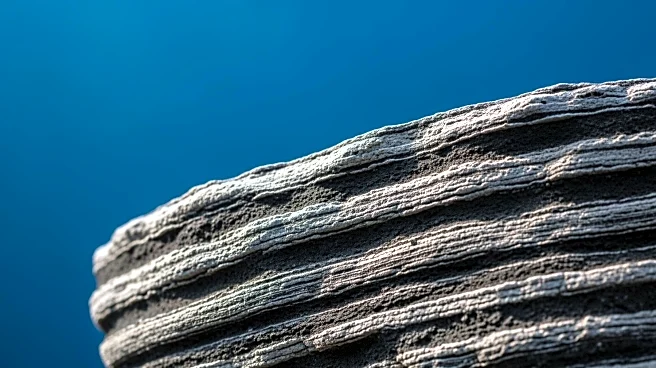
Scientists have discovered a unique 12.4-mile-thick rock layer beneath the oceanic crust under Bermuda, which is unlike any other similar layer worldwide. This layer, found within the tectonic plate on which Bermuda sits,
may be linked to volcanic activity that ceased around 31 million years ago. The study suggests that the last volcanic eruption injected mantle rock into the crust, creating a 'raft' that raises the ocean floor. This discovery provides new insights into the geological history of Bermuda and its oceanic swell, which has remained elevated despite the absence of recent volcanic activity.
Why It's Important?
The findings are crucial for understanding the geological processes that shape oceanic islands and their surrounding environments. By studying Bermuda's unique geological features, scientists can gain insights into the formation and evolution of other oceanic islands. This research also contributes to the broader understanding of Earth's mantle dynamics and the role of ancient volcanic activity in shaping current geological structures.
What's Next?
Researchers plan to investigate other islands to determine if similar rock layers exist elsewhere, which could indicate common geological processes. Further studies will focus on understanding the mantle dynamics beneath Bermuda and how they compare to other regions. This research could lead to new models of island formation and contribute to the study of Earth's geological history.
Beyond the Headlines
The discovery highlights the complexity of Earth's geological processes and the importance of studying extreme locations like Bermuda to understand more typical geological phenomena. It also underscores the need for continued exploration and research to uncover the hidden features of our planet's crust and mantle.