





What's Happening?
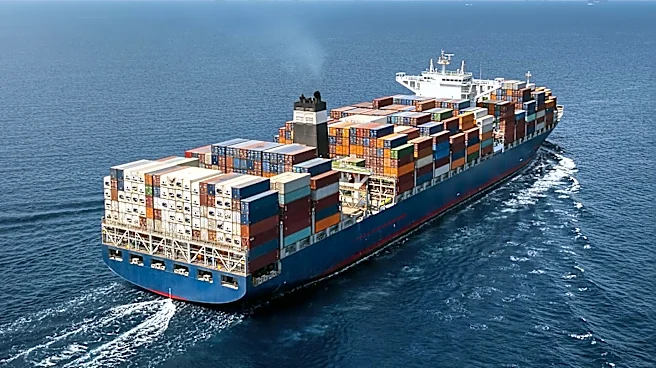
The number of tankers passing through the Strait of Hormuz has fallen to its lowest level since May, with only one tanker crossing on a recent Thursday. This decline is attributed to heightened shipping risks in the Middle East and rising oil prices,
which have reached $100 per barrel. The U.S. military has been conducting consecutive strikes against Iran, contributing to the instability in the region. Meanwhile, tanker traffic at the Bab el-Mandeb Strait has increased, with some vessels rerouting through the Suez Canal to avoid the Strait of Hormuz.
Why It's Important?
The Strait of Hormuz is a vital chokepoint for global oil supplies, with a significant portion of the world's oil passing through it. The reduction in tanker crossings highlights the impact of geopolitical tensions on global energy markets. Rising oil prices can have widespread economic implications, affecting everything from transportation costs to inflation rates. The situation underscores the vulnerability of global supply chains to regional conflicts and the strategic importance of maintaining open and secure maritime routes.
What's Next?
Continued military actions and diplomatic tensions in the Middle East are likely to keep the Strait of Hormuz a focal point of global attention. Oil markets may experience further volatility, with potential impacts on global economic stability. Countries reliant on oil imports may seek alternative routes or sources to mitigate risks. Diplomatic efforts may intensify to de-escalate tensions and ensure the security of critical maritime passages.