
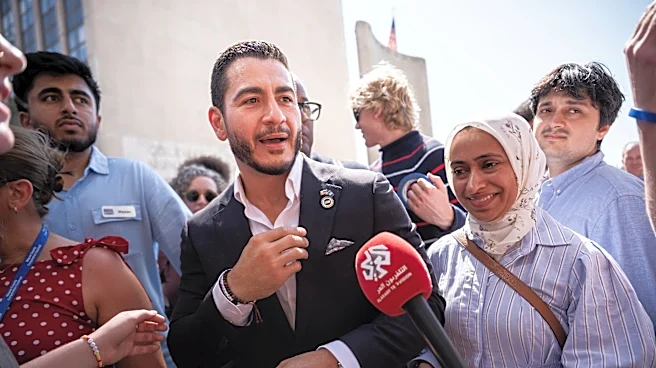
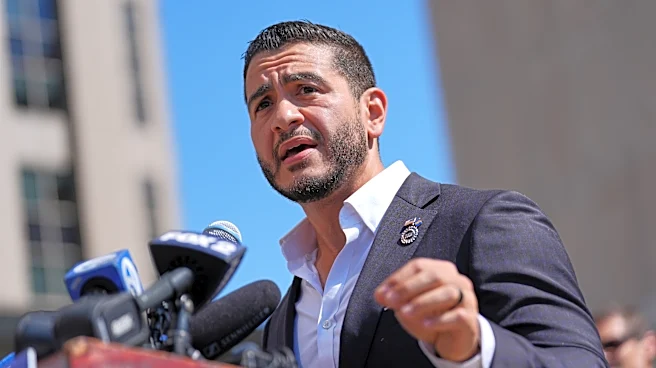
What's Happening?
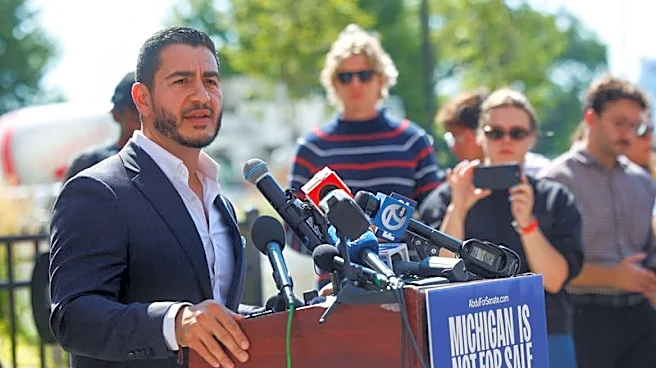
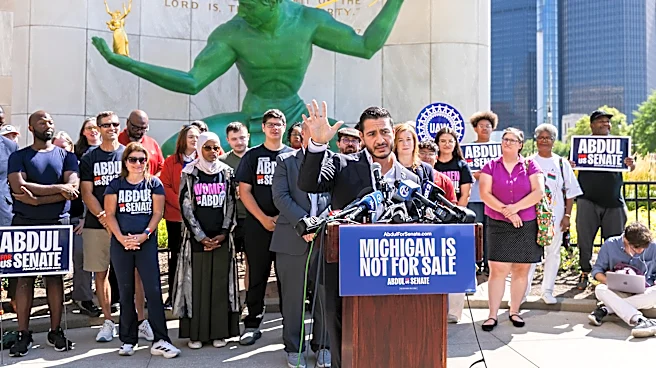
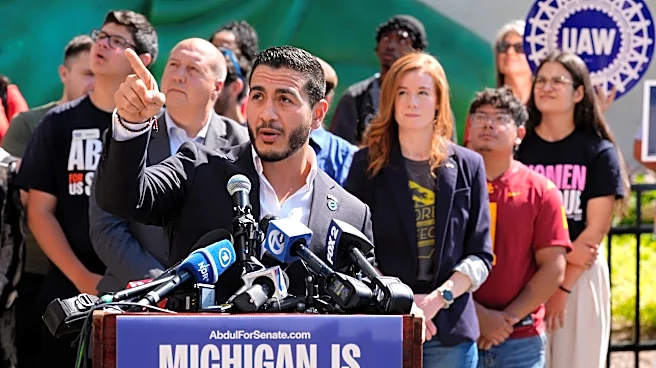
Abdul El-Sayed, a Democratic candidate in Michigan, is facing scrutiny over his identity and political platform. El-Sayed, a Muslim and son of Egyptian immigrants, recently won a Democratic primary, raising questions about his electability in the upcoming
general election. His progressive platform, which includes support for Medicare for All and abolishing Immigration and Customs Enforcement, has sparked debate among Democratic strategists. Concerns have been raised about his ability to appeal to swing voters in a closely divided state. El-Sayed's opponent, Mike Rogers, is endorsed by President Trump, adding a layer of political tension to the race.
Why It's Important?
The focus on El-Sayed's identity highlights the ongoing challenges of identity politics in the US. His candidacy represents a test for the Democratic Party's ability to embrace diversity while appealing to a broad electorate. The outcome of this race could influence the party's strategy in future elections, particularly in swing states. El-Sayed's platform also brings attention to key policy issues, such as healthcare and immigration, which are central to the national political discourse. The race may serve as a barometer for the public's receptiveness to progressive policies and diverse candidates.
What's Next?
As the general election approaches, El-Sayed will need to navigate the challenges of identity politics while articulating his policy positions. His campaign may focus on building coalitions and reaching out to undecided voters. The Democratic Party may also need to assess its messaging and support for candidates like El-Sayed. The race could see increased national attention, with potential implications for the party's strategy in the 2028 presidential election. The outcome may influence how both parties approach issues of diversity and inclusion in future campaigns.
Beyond the Headlines
El-Sayed's candidacy raises broader questions about the role of identity in American politics. It challenges traditional notions of electability and highlights the evolving demographics of the electorate. The race may prompt discussions on the intersection of race, religion, and politics, and the ways in which these factors influence voter perceptions. The situation also underscores the importance of addressing systemic biases and ensuring equitable representation in political processes.